

From Carbon Capture to Vast Forests: Taisugar on the Road to Net-Zero Emissions
From Carbon Capture to Vast Forests: Taisugar on the Road to Net-Zero Emissions
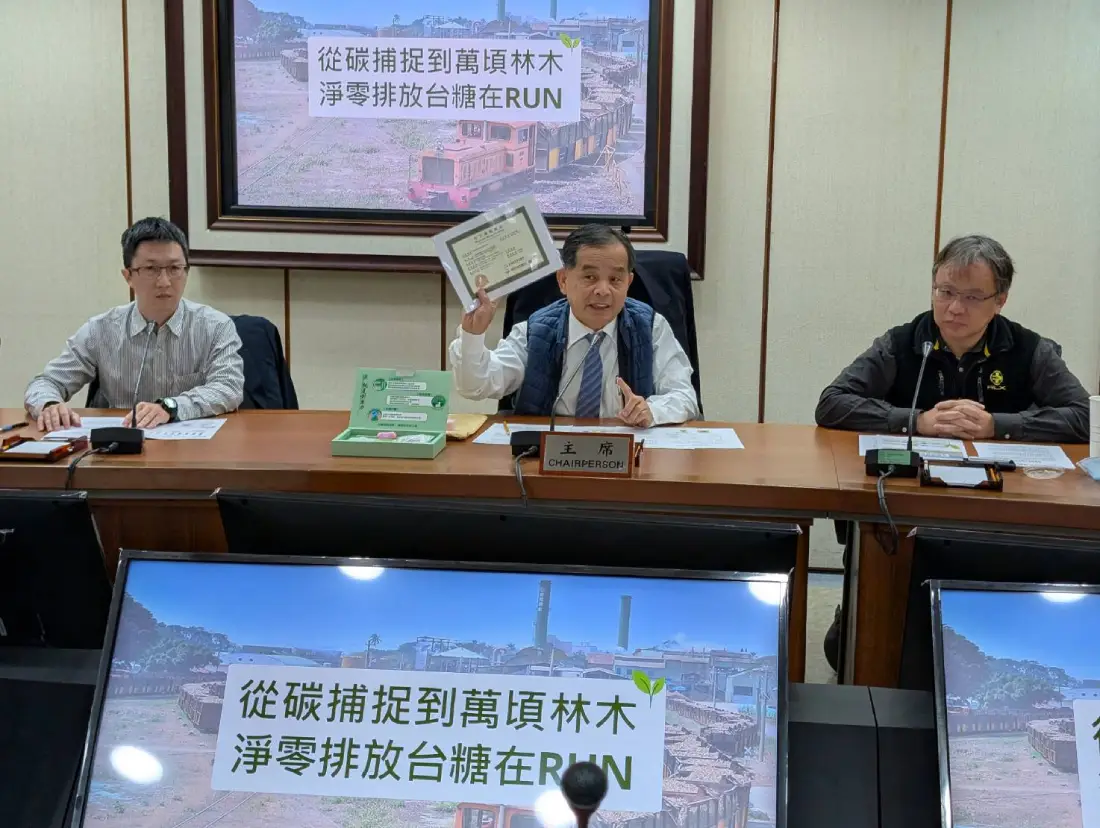
Chien-Chan Tseng (center), Vice President of Taisugar, explained that the Shanhua and Huwei sugar refineries have successively obtained biomass renewable energy certificates through bagasse-fired combined heat and power generation.
In response to the escalating risks of global warming and climate change, Taiwan Sugar Corporation (Taisugar) has proactively advanced a range of decarbonization initiatives. These include collaborating with external research institutions to conduct on-site carbon capture technology trials at sugar refineries, as well as strategically utilizing more than 10,000 hectares of plantation to develop forest-based carbon sinks. Through these measures, Taisugar aims to progressively realize Taiwan's 2050 net-zero emissions policy objectives and long-term vision, while contributing to the establishment of a circular and sustainable society.
Taisugar stated on the Jan. 5th that mitigating climate change through carbon reduction has become a shared global imperative, and that the company recognizes its responsibility to play an active role in the net-zero transition. Taisugar is reducing greenhouse gas emissions through the adoption of low-carbon fuel technologies, improvements in energy efficiency, and the expansion of renewable energy deployment. Over the medium to long term, the company is focusing on the development of negative emissions technologies by integrating resources across industry, government, academia, and research institutions. These efforts are intended to achieve an emissions reduction target of 28 ± 2% by 2030, while establishing a clear and credible pathway toward net-zero emissions by 2050.
Taking the sugar industry as an example, Taisugar operates combined heat and power (CHP) systems at its sugar mills by using bagasse as a biomass fuel. The carbon dioxide emitted during combustion is subsequently reabsorbed through photosynthesis during sugarcane growth, forming a natural carbon cycle. To further enhance the overall decarbonization impact, over the past two years, Taisugar has collaborated with the National Atomic Research Institute to conduct on-site trials during milling operations, deploying proprietary carbon capture equipment to capture carbon dioxide from boiler flue gas and convert it into reusable products such as sodium bicarbonate. This approach delivers dual benefits by simultaneously reducing emissions and advancing resource circularity.
As part of its green energy transition strategy, the CHP systems at Huwei Sugar Refinery and Shanhua Sugar Refinery have, over the past two years, successively obtained Renewable Energy Certificates (RECs) for biomass power generation and have been successfully sold to leading technology companies. Taisugar estimates that, starting next year, the two sugar refineries will collectively generate approximately 9,000 biomass RECs annually, establishing a benchmark for green energy transformation within Taiwan's sugar manufacturing sector.
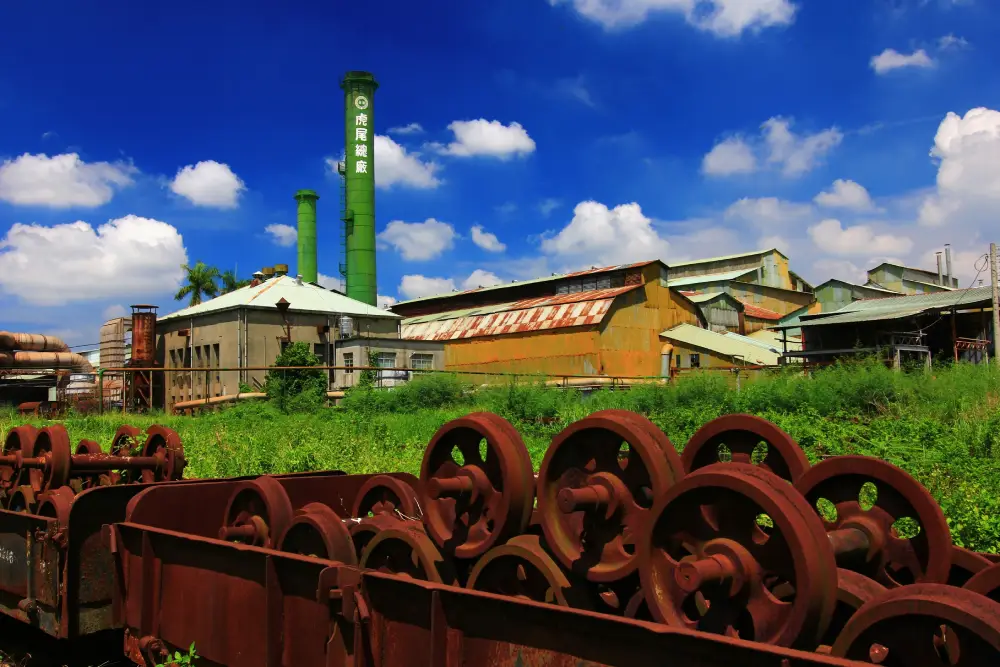
The Huwei Sugar Refinery of Taisugar generates combined heat and power (CHP) by combusting bagasse, thereby obtaining biomass renewable energy certificates.
In addition, Taisugar has commenced the development of forest carbon sinks, includes collaboration with the Hualien Branch of the Forestry and Nature Conservation Agency under the Ministry of Agriculture, under which Taisugar plans to apply to the Ministry of Environment for a voluntary emission reduction project covering 50 hectares of afforestation land within the Danongdafu Forest Park.
At the same time, drawing on the corporate afforestation models implemented by the National Property Administration, Taisugar is planning to publicly lease 20 hectares of fragmented sugarcane farmland located in Erlin Township, Changhua County, to enable corporate participation in afforestation initiatives, thereby further enhancing national forest carbon sequestration capacity.
Looking ahead, Taisugar remains committed to its vision of "Sweet Industry, Green Sustainability." Building on its traditional sugar manufacturing foundation, the company is actively transforming toward carbon reduction initiatives and participation in green finance markets, delivering tangible contributions to Taiwan's 2050 net-zero emissions target and the development of a green economy, while advancing toward a circular and sustainable future.

Taisugar's forest carbon sink development program will collaborate with the Ministry of Agriculture, with plans to apply for a voluntary emission reduction project using 50 hectares of afforestation land at the Danongdafu Forest Park.
