

CCS Emerges as a Low-Carbon Power Option for Taiwan's AI and Semiconductor Industries
CCS Emerges as a Low-Carbon Power Option for Taiwan's AI and Semiconductor Industries
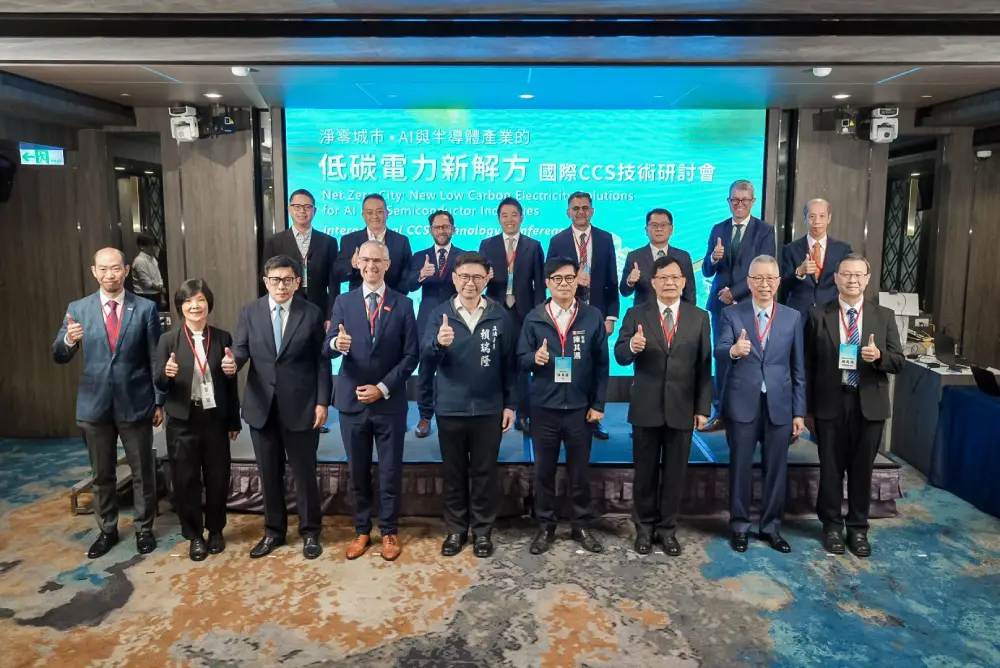
To help Taiwan align with the global energy transition, the Taiwan-U.S. Carbon Capture, Utilization and Storage Industry Promotion Alliance (TUCA), guided by the Kaohsiung City Government, held "Net Zero City: New Low Carbon Electricity Solutions for AI and Semiconductor Industries International CCS Technology Conference" on August 12. The event was co-organized by the British Office Taipei, Taipower, CPC Corporation, Taiwan, and the Taiwan Institute of Economic Research (TIER), and sponsored by Mitsui O.S.K. Lines (MOL), with strategic partners including Marsh and SLB also participating.
The seminar brought together representatives from governments, industries, and research institutions in the UK, the US, Japan, Norway, Australia, and Taiwan. Discussions focused on developing low-carbon power and CCS, as well as the feasibility of deploying CCS in the power sector to meet growing industrial demand for low-carbon electricity.
Kaohsiung Mayor Chi-Mai Chen said the city, a major industrial hub and one of Taiwan's largest carbon-fee burdens, faces a "survival battle" in its net-zero transition, but also significant development opportunities. He noted that AI computing centers are expected to increasingly expand in Kaohsiung, while the semiconductor industry requires stable, low-carbon electricity. The development of CCS technologies and viable business models could provide a solution for Kaohsiung, with benefits potentially extending nationwide.
With AI and semiconductor demand driving rapid growth in electricity consumption, renewable energy expansion alone may not be sufficient to meet near-term demand for stable low-carbon power. Participants said fossil-fuel generation combined with CCS could provide firm and dispatchable low-carbon electricity, offering another option for industries pursuing 24/7 Carbon-Free Energy (24/7 CFE). Legislator Lai Jui-lung likewise stressed that Kaohsiung must balance reliable power supply, industrial development and emissions reduction as its steel, petrochemical and power industries undergo transition.
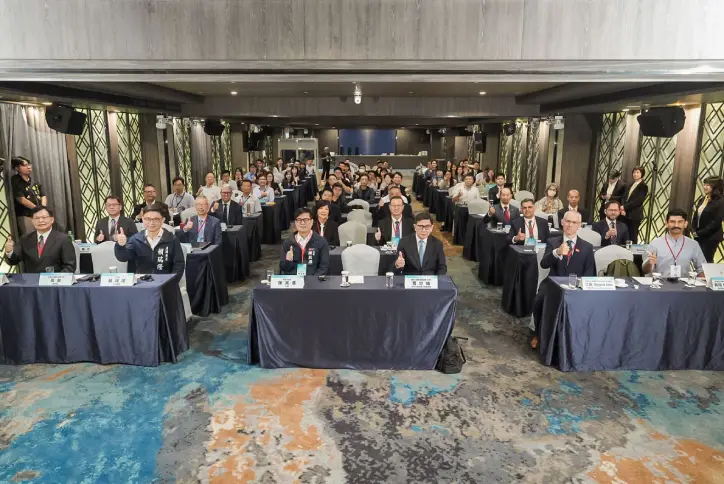
Wayne Ives (艾巍), Deputy Representative of the British Office Taipei, said CCS is an important component of achieving net zero, but its development requires not only technological innovation but also appropriate regulations, viable business models, and close government-industry cooperation. SEMI Global Chief Marketing Officer and Taiwan President Terry Tsao (曹世綸) said semiconductor and AI industries require both reliable electricity and decarbonization, adding that low-carbon power solutions should comprise diverse and complementary resources. The seminar also examined how CCS-enabled low-carbon electricity could fit into corporate energy strategies.
The event featured 3 sessions covering carbon-free power and CCS strategy, power generation and carbon capture, and CO₂ transportation and storage. Speakers from TIER, Taipower, Xodus Group, Arup, SLB Capturi, CPC Corp., Taiwan, MOL, Technip Energies, NSTA, CO2CRC, Marsh and Rystad Energy discussed business models, technology deployment, infrastructure, regulation, risk management, insurance and investment. The organizers said the exchange aimed to build international cooperation across the CCS value chain and explore pathways for combining power generation with CCS to provide stable low-carbon electricity for Taiwan's AI and semiconductor industries, accelerating the net-zero transition in Kaohsiung and Taiwan.
Source: Taiwan Institute of Economic Research (TIER)
Compilation & Ttranslation: EnergyOMNI
