

Fully Self-Developed AI-Controlled USVs and Federated Learning: OAC Builds a Stable and Secure New Defense Line for Smart Maritime Governance
Fully Self-Developed AI-Controlled USVs and Federated Learning: OAC Builds a Stable and Secure New Defense Line for Smart Maritime Governance
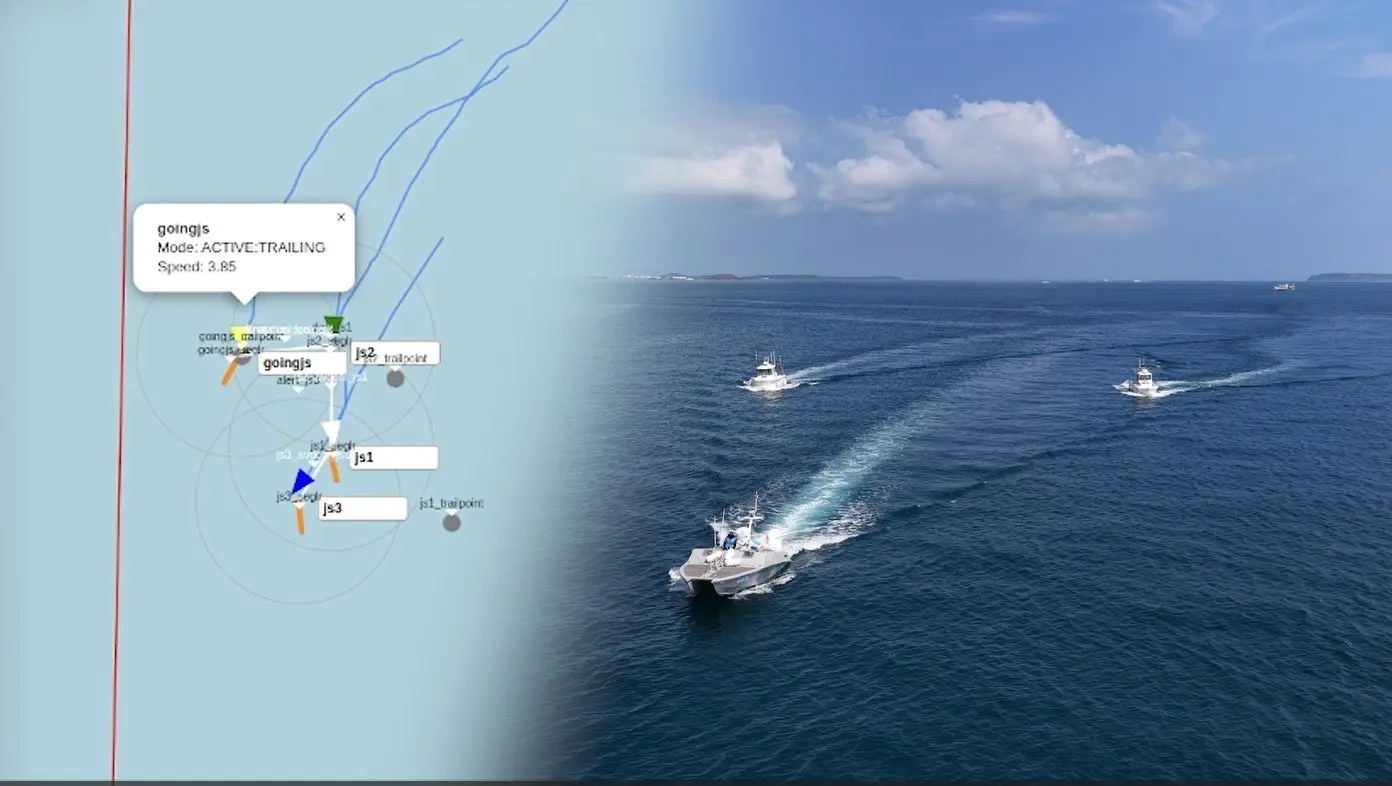
AI Cruise and intelligent verification of a medium- and large-sized USVs
The Ocean Affairs Council (OAC) announced today (2) that, to accelerate the development and practical implementation of Taiwan's marine technologies and smart maritime applications, it subsidized the implementation of the "Feasibility and Stability Verification of Scalable USVs Applications under an AI Cruise and Federated Learning Architecture for New Maritime Objects" project through its Marine Science and Technology Project (海洋科技專案計畫). The project recently completed successful autonomous navigation and intelligent verification tests for medium- and large-sized Unmanned Surface Vessels (USVs) in waters off Kaohsiung Port.
By integrating "AI Cruise" (AI 巡航) with "Federated Learning," (聯邦學習) the innovative technology not only overcomes challenges associated with the confidentiality of maritime data but also opens a new chapter in Taiwan's smart ocean governance. The OAC emphasized that the localization and domestic production of key technologies are critical to reducing reliance on foreign technologies subject to export controls and strengthening Taiwan's Maritime Domain Awareness (MDA) and resilience in maritime security governance. Through public-private collaboration, the project advances the development of next-generation unmanned vehicles and lays a solid foundation for Taiwan's development as a maritime nation built on "security, sustainability, and shared prosperity."
Data Stays at the Source, Security Gets a Major Upgrade: An "Online Study Group" for Unmanned Vessels
In the past, maritime imagery often involved national defense or sensitive port-area information, effectively leaving datasets isolated from one another and significantly restricting the training of AI models. This project introduced an advanced "Federated Learning" architecture and pioneered an innovative "data stays put, models move" approach. In simple terms, each unmanned vessel can be viewed as studying independently in its own "examination room." After training, the vessels do not transmit sensitive original images; instead, they exchange only their "earning outcomes," in the form of algorithm parameters.
This approach protects both cybersecurity and sensitive imagery while enabling the entire fleet of unmanned vessels to achieve cross-platform "collaborative evolution," substantially enhancing their intelligent object-recognition capabilities.
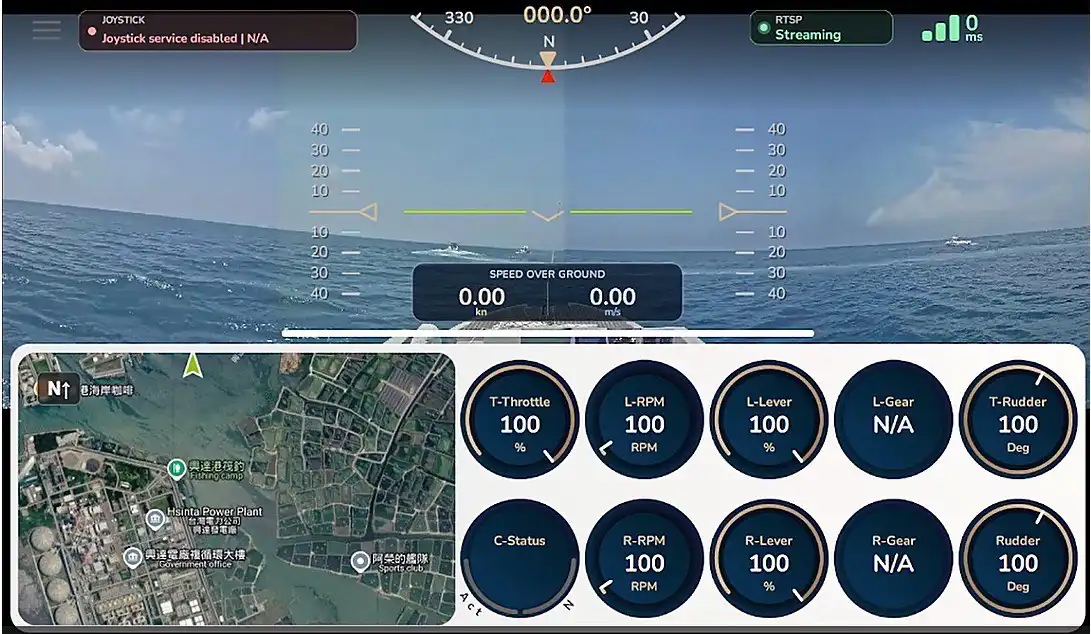
Real-time navigation information displayed onboard
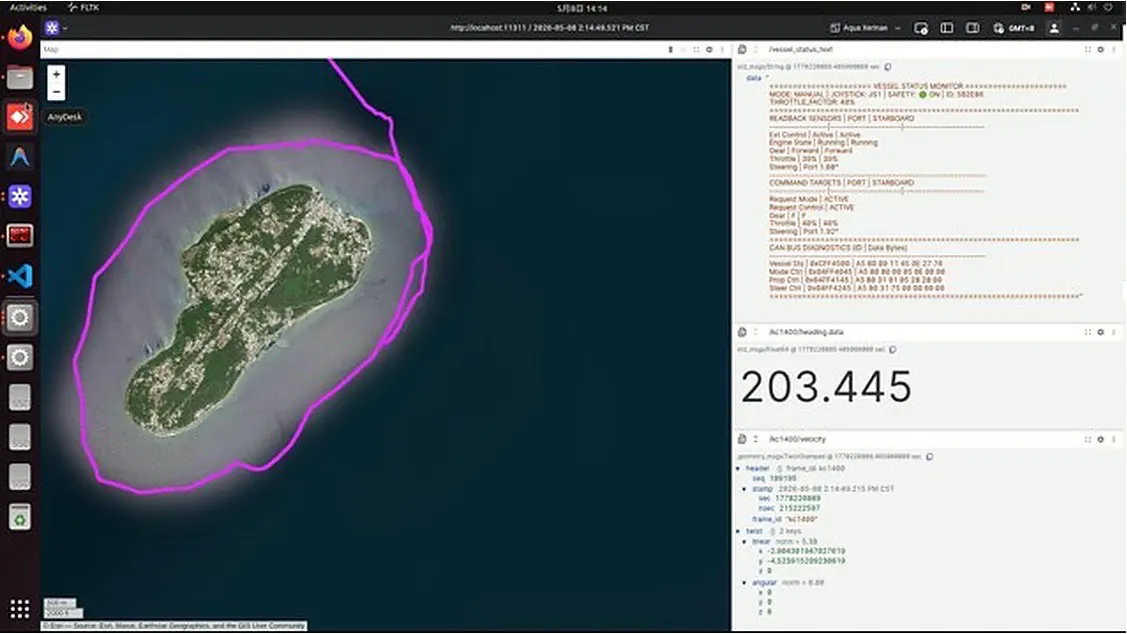
Recorded navigation track in the waters surrounding Xiaoliuqiu
Remembering New Friends Without Forgetting Old Ones: An Anti-Forgetting Brain
During the AI learning process, a common technical risk is "Catastrophic Forgetting," in which a model learns new information but loses previously acquired skills. To overcome this challenge, the research team introduced an "Elastic Weight Consolidation" (EWC) technique. This enables unmanned vessels to learn to identify entirely new objects—such as newly deployed warning buoys at sea—without losing their established ability to recognize various commercial and fishing vessels.
In field testing, the system achieved a mean average precision at IoU 0.5 (mAP50) of more than 90% for core target detection, real-time inference speeds of more than 15 frames per second (15 FPS), and an old-class recognition forgetting rate successfully controlled at below 10%. These results demonstrate a highly stable and reliable level of recognition performance.
Withstanding Rough Seas: Launch of Taiwan's First Autonomous for Marine Operations
To bring the technology into practical use, the team conducted stress tests in the Fengbitou (鳳鼻頭 ) waters off Kaohsiung Port. Under real-world conditions, including sea states of Level 2 or above and complex lighting environments, the unmanned vessels successfully completed a series of demanding missions, including A-to-B obstacle avoidance, hexagonal navigation, Z-shaped cruising, and large-area "awnmower" search patterns.
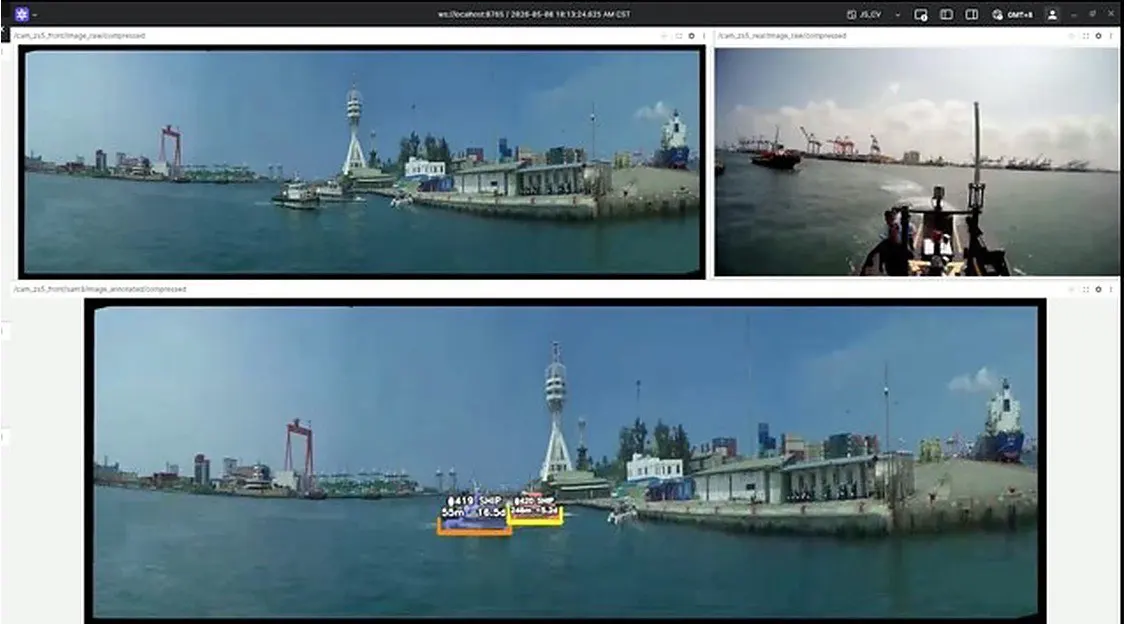
AI-based maritime target recognition
At the same time, the project established Taiwan's first Standard Operating Procedure (SOP) for medium- and large-sized USVs operating in real maritime environments. The system also features an emergency safety takeover mechanism that enables manual intervention within 3 seconds in the event of a communication interruption or other emergency, helping ensure safe and reliable navigation.
The OAC highlighted that all algorithms created for the project are entirely self-developed and are closely integrated with Taiwan's domestic supply chain. The aim is to effectively address challenges posed by foreign export controls and to significantly enhance Taiwan's resilience in marine research and maritime security governance. The implementation of the subsidized project not only demonstrates the outstanding results of cross-sector collaboration among industry, government, and academia and advances marine technology development, but also successfully validates the feasibility and high stability of USV technology for practical applications.
Source: Ocean Affairs Council (OAC)
Compilation & Ttranslation: EnergyOMNI
