

HKPC's AI Inspection Robot "HazardBot" Receives Bronze at 2026 Edison Awards Advancing Smart Nuclear Infrastructure in the Greater Bay Area
HKPC's AI Inspection Robot "HazardBot" Receives Bronze at 2026 Edison Awards Advancing Smart Nuclear Infrastructure in the Greater Bay Area
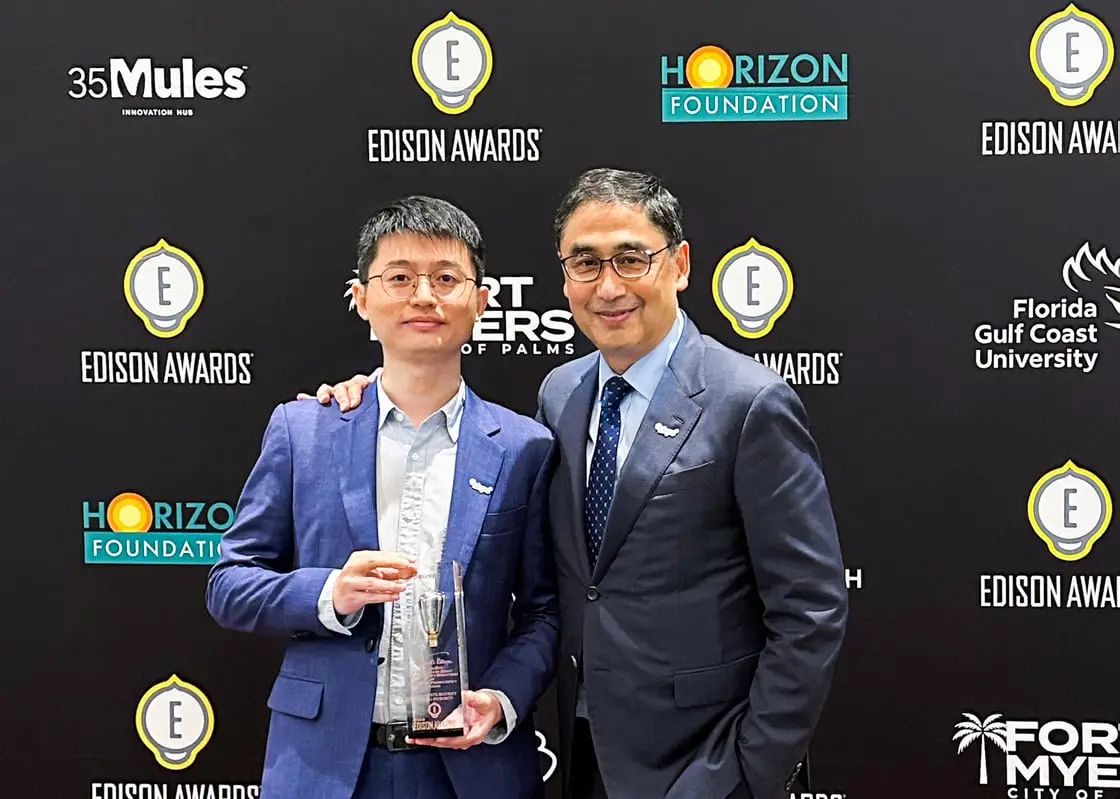
Mohamed BUTT, Executive Director of HKPC and Dr. Lei XU, Consultant of the Robotics and Artificial Intelligence Division of HKPC, received the award on behalf of HKPC’s award-winning technology R&D team at the 2026 Edison Awards Gala hosted in Fort Myers, Florida, USA.
(Source: HKPC)
The "HazardBot" autonomous transformable wheel-legged inspection robot, jointly developed by the Hong Kong Productivity Council, CGN (Shenzhen) Operation Technology and Radiation Monitoring Co., Ltd., Sun Yat-sen University, Xi'an Jiaotong University and Direct Drive Tech Co., Ltd., has received sector funding support under the Innovation and Technology Fund of the Innovation and Technology Commission (ITC) and was awarded the Bronze Prize at the prestigious global innovation and technology awards, the Edison Awards.
Integrating edge artificial intelligence (AI), a transformable robotic system design, and precision navigation and positioning technologies capable of operating in signal-denied environments, HazardBot enhances the safety and intelligence of inspection operations in high-risk nuclear power plant environments.
HazardBot has already completed on-site application testing and demonstration validation at the Taishan Nuclear Power Plant. The system is expected to be progressively deployed across other nuclear power plants in the Guangdong-Hong Kong-Macao Greater Bay Area.
Mohamed Din Butt, Executive Director of the HKPC, said, "This marks the fourth consecutive year that research and development projects led by the HKPC have received recognition at the Edison Awards, demonstrating continued international recognition of Hong Kong's innovation and technology achievements.
Developed in response to the practical challenges of nuclear power plant inspection, HazardBot has been successfully deployed in major national infrastructure facilities, fully showcasing the collaborative strengths of Hong Kong R&D and Greater Bay Area cooperation, while also reflecting recognition of the effectiveness of Hong Kong’s government-industry-academia-research collaboration model.
At the core of the system is the deep integration of AI software and transformable robotic hardware, enabling robots to genuinely replace human workers in high-risk operations and achieve intelligent, unmanned inspection capabilities.
The HKPC began early deployment in AI research and development, and related technologies have already been successfully commercialised and applied in practice. Looking ahead, the Council will continue to proactively align with the country's 15th Five-Year Plan, drive the application of forward-looking technologies, accelerate the intelligent and green transformation of traditional industries, and promote the development of high-end and emerging industries, thereby empowering high-quality development in the Greater Bay Area and supporting national development needs."
AI-Powered Transformable Robot Enables Autonomous Navigation for Unmanned Smart Inspection in Nuclear Power Plants
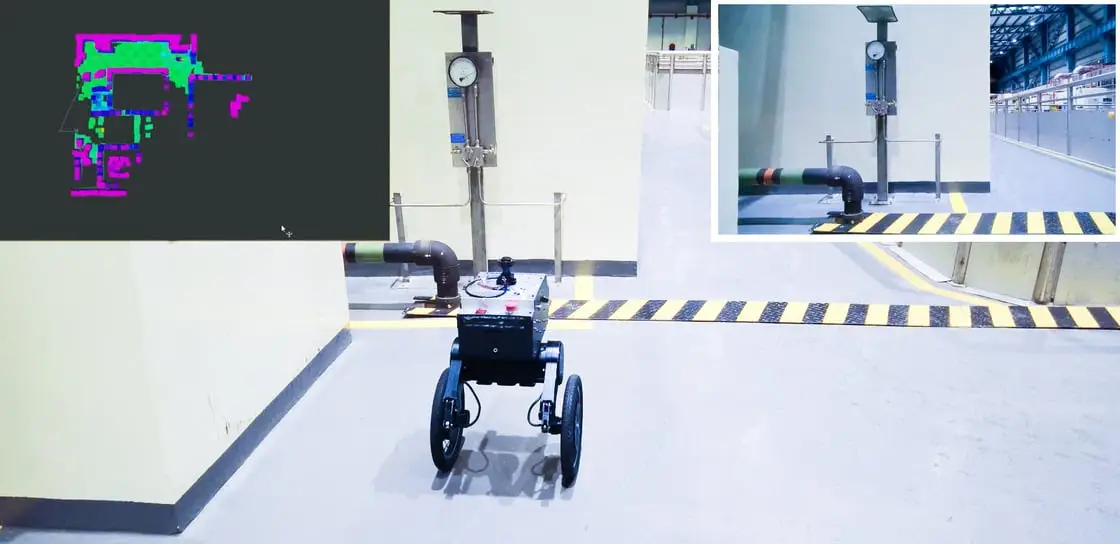
HazardBot was tested on-site at the Taishan Nuclear Power Plant in Guangdong. The top-left image shows LiDAR-based mapping and autonomous navigation, while the top-right displays the gimbal-mounted camera capturing meter reading tasks.
(Source: HKPC)
The operation and maintenance of nuclear power plants are highly complex and critical to regional electricity supply. However, conventional inspection procedures face significant challenges, including confined spaces within cooling water pump rooms, large numbers of instrument panels, low manual inspection efficiency, and radiation hazards. Engineers are required to physically enter cooling water pump facilities, resulting in substantial manpower demands, potential radiation exposure, and harsh working conditions, all of which limit inspection efficiency and raise safety concerns.
As a silver award winner of the 2025 R&D 100 Awards in the Corporate Social Responsibility Special Recognition category, HazardBot is the world's first nuclear power plant inspection robot to integrate transformable wheel-legged mobility with AI. By leveraging multiple AI modules, including perception, mapping, localisation, planning, and control, the robot is capable of real-time autonomous navigation and adaptive operation in signal-denied environments.
Equipped with an advanced AI-powered inspection model, HazardBot achieves up to 96% accuracy in instrument reading and analysis, while enabling engineers to conduct remote monitoring operations. Its edge computing capability supports fully offline operation, allowing the robot to autonomously perform tasks even in shielded or interference-prone areas.
In addition, its transformable wheel-legged design effectively addresses mobility challenges in narrow plant facilities, instrument-dense environments, and other complex operational settings. The wheeled system enables high-speed movement on flat surfaces and supports 360-degree steering, while the legged mechanism allows the robot to manoeuvre flexibly through confined and complicated spaces, overcoming obstacles such as stairs and railings. The system significantly outperforms conventional robots and manual inspection methods in both operational flexibility and efficiency.
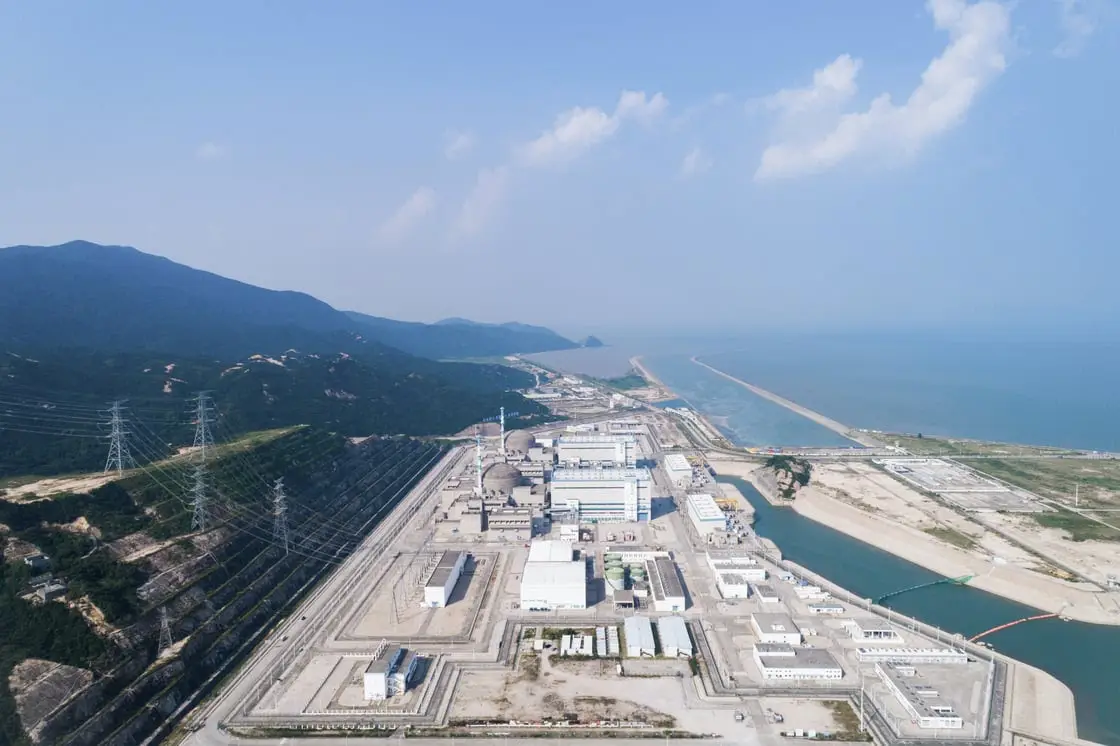
HazardBot has completed on-site trials at the Taishan Nuclear Power Plant in Guangdong and is set for phased deployment to other nuclear power plants in the Greater Bay Area.
(Source: HKPC)
The integration of software and hardware enables HazardBot to genuinely replace human workers in entering high-radiation areas to carry out inspection tasks, significantly reducing personnel exposure risks while ensuring the continued safe and efficient operation of nuclear power plants. The robot is also capable of inspecting other high-risk environments, including areas with high temperatures, high humidity, and confined spaces. In emergency situations such as radioactive leaks, the system can further minimise the need for on-site personnel, comprehensively enhancing nuclear safety standards.
Looking ahead, the project's technology also has strong potential for broader application across various urban infrastructure facilities in Hong Kong, including water treatment plants, pumping stations, sewage treatment facilities, electrical rooms, and power substations. The system is expected to support intelligent inspection operations in enclosed environments and drive the smart upgrading of energy and infrastructure systems in Hong Kong and the wider region.
About the Edison Awards
First held in 1987, the Edison Awards are widely recognised as one of the world's most prestigious technology awards, honouring outstanding research achievements and products that demonstrate excellence in originality, creativity, and advanced technological innovation.
Previous award recipients have included leading corporations and research institutions such as Genentech, General Electric, General Motors, GoPro, IBM, and NVIDIA. For more information about the 2026 Edison Awards, please visit the official Edison Awards website https://edisonawards.com/
About Hong Kong Productivity Council
The Hong Kong Productivity Council (HKPC) is a statutory body established in 1967, dedicated to enhancing the productivity and competitiveness of Hong Kong enterprises through world-class applied R&D, innovative technology services, and integrated manufacturing solutions. As a market-oriented, international R&D organisation, HKPC leverages its deep expertise and extensive industry experience in key areas such as AI, advanced manufacturing, life and health technology, green technology and new energy to drive new industrialisation and support the growth of emerging and future industries.
HKPC focuses on addressing businesses challenges and industrial technology needs, promoting the full integration between technological and industrial innovation. Through technology transfer, product innovation, intellectual property protection and commercialisation of R&D outcomes, the Council fosters collaboration with the local business community as well as top global R&D institutions, delivering added value to industries and advancing the development of new productive forces. HKPC's world-class R&D achievements have been widely recognised over the years, winning an array of local and overseas accolades, reinforcing Hong Kong's role as an international innovation and technology centre and a smart city.
To help enterprises capitalise on Hong Kong's strengths in international connectivity to expand into global markets, HKPC offers comprehensive overseas expansion services tailored to critical areas including product development, technology, manufacturing, and management, enabling businesses to successfully go global from Hong Kong.
HKPC is also committed to providing timely and practical support to SMEs and startups with timely and practical, assisting them in accessing Government funding programmes. Through its FutureSkills training initiatives, HKPC helps both industry and academia stay ahead in latest digital and STEM technologies, nurturing a future-ready talent pool for Hong Kong. For more information, please check www.hkpc.org
