

AI Data Centers Drive New Business Opportunities: TÜV Rheinland Brings Taiwan and Australia Experts Together to Explore Fuel Cell Development
AI Data Centers Drive New Business Opportunities: TÜV Rheinland Brings Taiwan and Australia Experts Together to Explore Fuel Cell Development
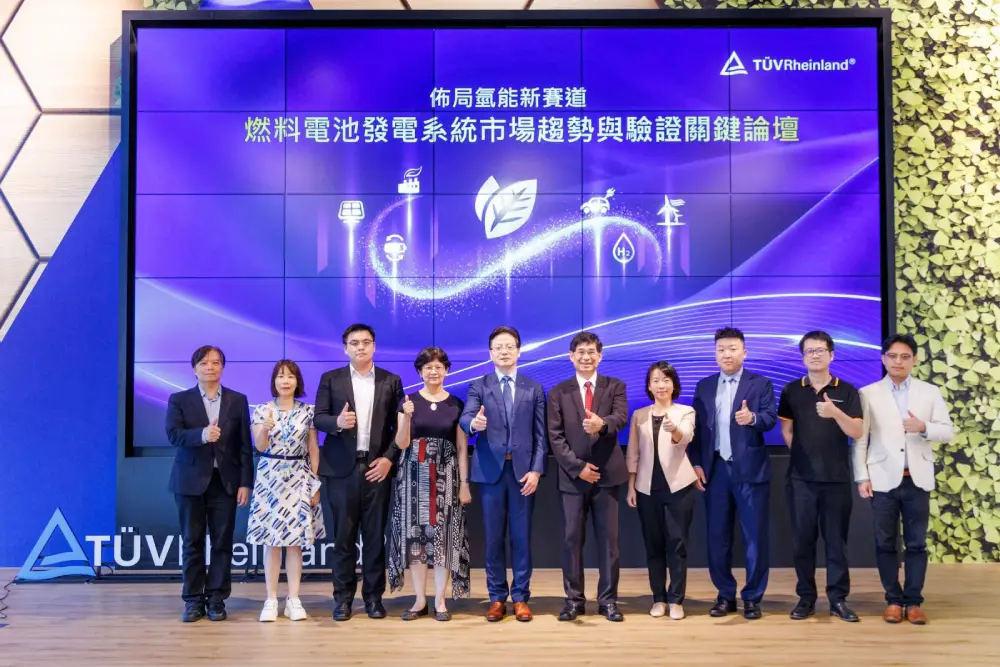
(Source: TÜV Rheinland)
As the global transition toward net-zero emissions accelerates, hydrogen energy and distributed energy system have become strategic priorities in corporate energy planning. TÜV Rheinland, the internationally recognized independent testing, inspection, and certification organization, hosted the forum "Positioning for the New Hydrogen Economy: Market Trends and Key Verification Requirements for Fuel Cell Power Generation Systems (佈局氫能新賽道:燃料電池發電系統市場趨勢與驗證關鍵論壇)" in Taipei on May 28, attracting a strong turnout of industry leaders and stakeholders focused on advancing the clean energy transition.
The forum brought together distinguished experts from government, industry, and academia, including representatives from the Energy Administration of the Ministry of Economic Affairs (MOEAEA), the Australian Office Taipei, BloombergNEF, and the Industrial Technology Research Institute (ITRI). Through comprehensive discussions covering policy incentives, international investment trends, market entry strategies, and explosion protection and safety standards, participants explored the evolving landscape of fuel cell power generation systems and examined the critical certification and compliance requirements necessary to support their large-scale deployment.
The forum opened with remarks by Wei-Chun Li, Senior Vice President of Solar and Commercial Products Services, Greater China, TÜV Rheinland. He noted that, amid the global drive toward energy diversification and low-carbon transition, fuel cell power generation systems are rapidly progressing from the technology validation stage to commercial deployment. However, companies seeking to expand into international markets continue to face multiple challenges, including differing national policies, regulatory requirements, and market access standards.
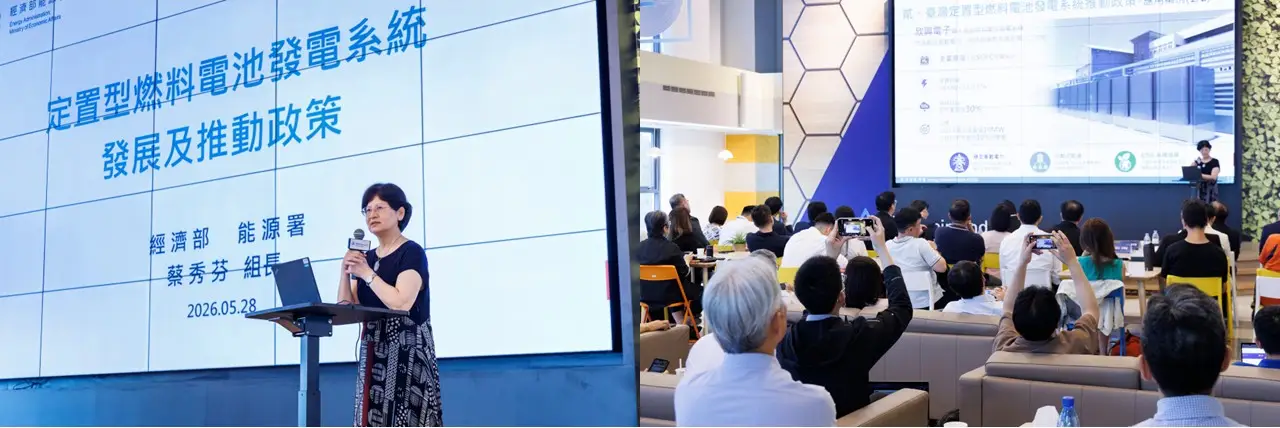
(Source: TÜV Rheinland)
Addressing developments in the local market, Hsiu-Feng Tsai, Head of the Oil and Gas Development and Management Division at MOEAEA, provided an in-depth analysis of the latest policy initiatives. She noted that Taiwan is accelerating the commercialization of stationary fuel cell power generation systems, with the AI sector, data centers, semiconductor manufacturing, and other energy-intensive industries identified as priority application areas. The government aims to achieve a cumulative deployment of 100 MW of low-carbon power capacity by 2029.
To support this goal, the MOEAEA has expanded its incentive program by introducing a new project-based application category for installations exceeding 2 MW. Subsidies of up to NT$70,000 per kilowatt are available, helping to accelerate the deployment of large-scale commercial projects.
Fuel cell applications in Taiwan have gradually entered the commercialization stage, with practical implementations already underway across electronics manufacturing and industrial facilities. These developments indicate that the market is progressing beyond pilot demonstrations and validation projects toward broader, large-scale adoption.
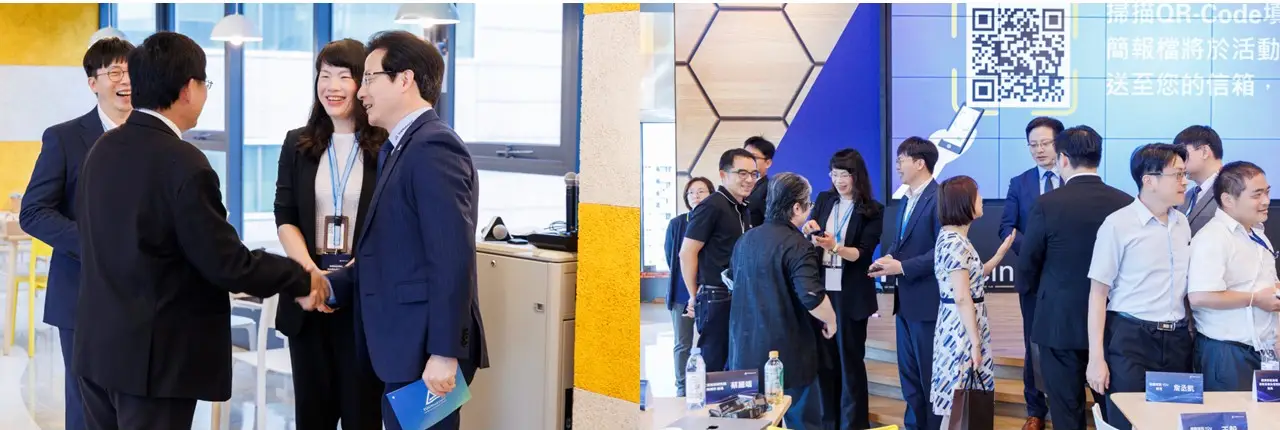
(Source: TÜV Rheinland)
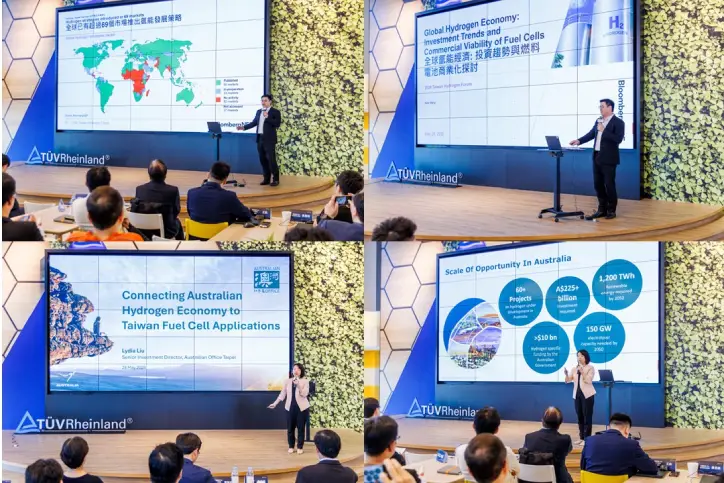
From an international perspective, Lydia Liu, Senior Investment Director of Commercial Division at the Australian Office Taipei, delivered a presentation on "Connecting Australia's Hydrogen Economy with Taiwan's Fuel Cell Applications," highlighting the complementary strengths of Australia–Taiwan energy cooperation and the commercial potential of fuel cell technologies.
As Taiwan's largest energy supplier, Australia is well positioned to meet the island's future energy needs through the export of green hydrogen and green ammonia produced from its abundant renewable energy resources. The Australian Government has committed more than AUD 10 billion to hydrogen development, while renewable energy incentive programs related to hydrogen have exceeded AUD 40 billion in value. Australia has also set a target of producing between 15 million and 30 million tonnes of green hydrogen annually by 2050, underscoring its commitment to accelerating the deployment of hydrogen, green fuels, and low-carbon industries.
Beyond serving as a major export hub for the Asia-Pacific market, Australia is witnessing rapidly growing domestic demand for hydrogen applications, including long-haul heavy-duty transportation, stationary backup power, and decarbonization solutions for mining operations. These developments are expected to create significant opportunities for international collaboration and market expansion for Taiwan's fuel cell and hydrogen equipment industries.
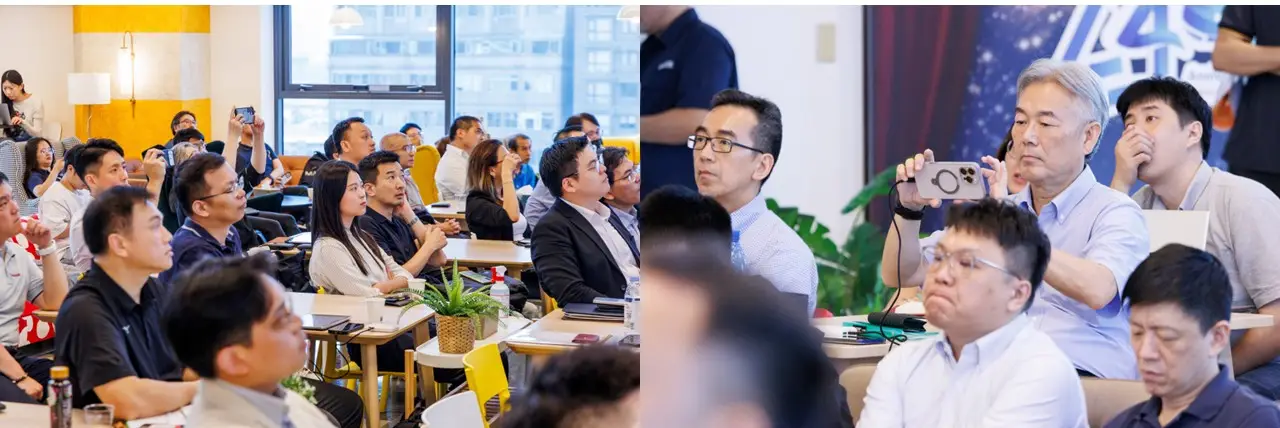
(Source: TÜV Rheinland)
During a panel discussion moderated by Chun-Li Lee, Honorary Advisor to the Italian Chamber of Commerce in Taipei (ICCT), representatives from government, industry, and academia engaged in an in-depth dialogue on Taiwan's opportunities within the rapidly evolving global hydrogen economy. The panelists agreed that Taiwan's enterprises possess a high degree of supply chain flexibility and, by effectively leveraging policy incentives while aligning with international standards, are well positioned to secure a strategic role within the global hydrogen value chain.
Sen Wang, Manager of Solar and Commercial Products Services at TÜV Rheinland (Shanghai), further noted that the current market is primarily driven by two mainstream fuel cell technologies: proton exchange membrane fuel cells (PEMFCs) and solid oxide fuel cells (SOFCs). PEMFCs are widely suited for transportation and mobility applications, while SOFCs are more commonly deployed in large-scale power generation projects.
As the global hydrogen and fuel cell market continues to advance toward commercialization, fuel cell systems of various types must comply with a wide range of international regulatory and certification requirements before entering overseas markets. These include compliance with CE directives, explosion protection standards, and functional safety requirements.
(Source: TÜV Rheinland)
The latter half of the forum focused on core technologies and safety regulations. Li-Duan Tsai, Division Director at the Mechanical and Mechatronics Systems Research Laboratories of the ITRI, provided a detailed introduction to the High-Power Fuel Cell Testing and Verification Center, which has established a comprehensive verification framework covering the entire value chain, from key materials and membrane electrode assemblies (MEAs) to fuel cell stacks and complete systems. Fully aligned with international standards such as IEC 62282, ASTM, and ISO, the center has developed repeatable and traceable testing procedures, demonstrating the strong technical verification capabilities of Taiwan's research institutions.
Addressing safety protection, one of the most critical aspects of hydrogen deployment, Szu-Ming Huang, Senior Project Engineer for Industrial Services and Cybersecurity at TÜV Rheinland, shared insights into explosion protection design and safety assessment for fuel cell power generation systems.
Drawing on international standards and engineering safety practices, he examined key approaches to managing fire and explosion risks, including hazardous area classification, ignition source control, ventilation and dilution design, equipment suitability for explosive atmospheres, as well as gas detection and emergency shutdown mechanisms. He also outlined the safety assessment framework established under international standards such as IEC 62282 and IEC 60079. Comprehensive explosion protection design, coupled with independent third-party safety verification, can help reduce operational risks associated with hydrogen technologies and equipment.
TÜV Rheinland will continue to serve as a trusted partner in technology assurance and regulatory compliance. Through its comprehensive testing, inspection, and certification services, the company helps Taiwanese enterprises transform regulatory challenges into competitive advantages, enabling them to safely and efficiently capture opportunities in the rapidly growing global hydrogen economy.
(Source: TÜV Rheinland)
Source: TÜV Rheinland
