

Four Nations Convene at the 2025 Nordic–Taiwan Sustainable Energy Forum to Strengthen Clean-Energy Cooperation and Accelerate Net-Zero Progress
Four Nations Convene at the 2025 Nordic–Taiwan Sustainable Energy Forum to Strengthen Clean-Energy Cooperation and Accelerate Net-Zero Progress
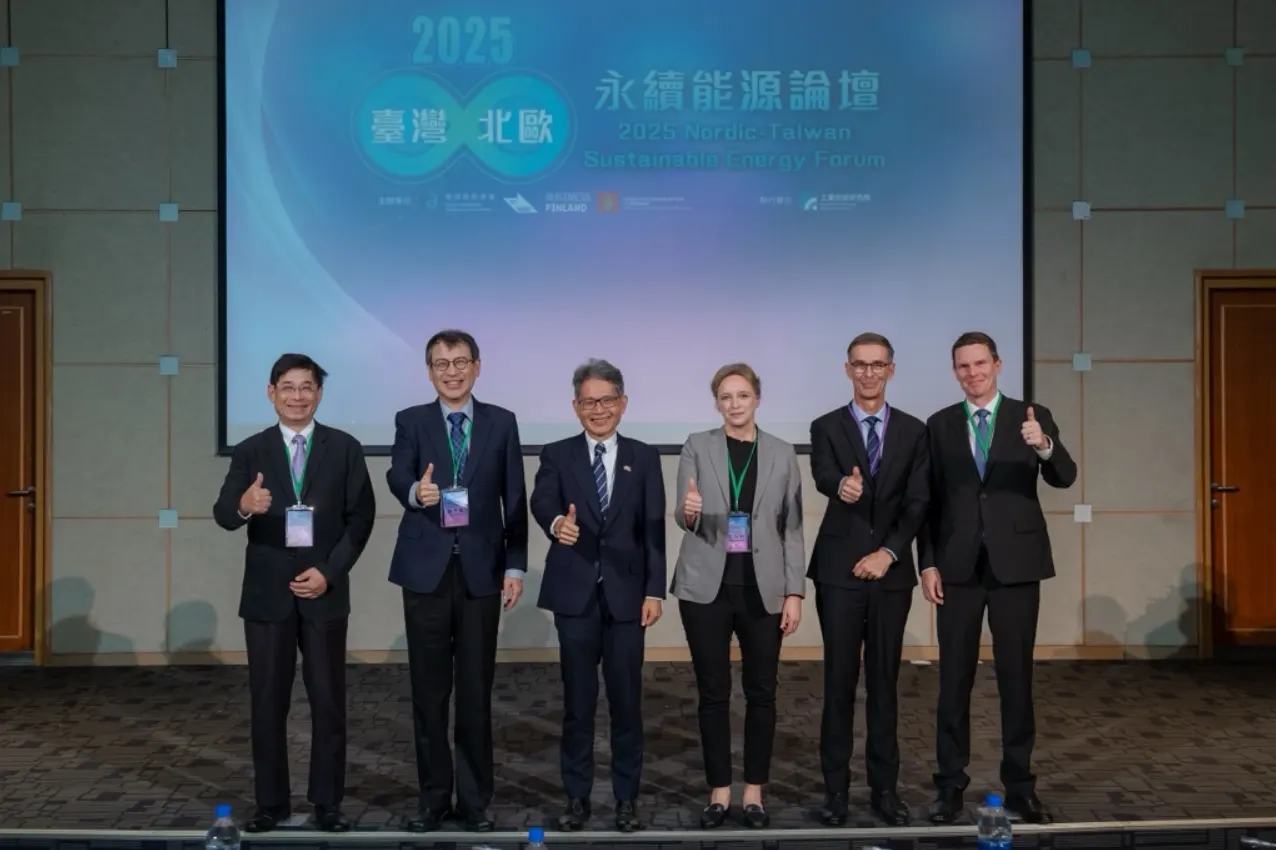
The Energy Administration of Taiwan's Ministry of Economic Affairs, together with the Danish Trade Council, the Finnish Trade Center, and the Swedish Trade and Invest Council in Taipei, co-hosted the 2025 Nordic–Taiwan Sustainable Energy Forum on December 3 at the GIS MOTC Convention Center. The event drew a strong turnout from domestic and international industry leaders, experts and research institutions.
This year's forum centered on diversified renewable energy development and Taiwan's energy transition, with discussions focused on grid resilience, offshore wind, geothermal energy and emerging decarbonization technologies. Through enhanced multilateral exchanges between Taiwan and the Nordic countries, the forum aims to jointly accelerate global sustainable development.
MOEA Administrative Deputy Minister Chien-Hsin Lai noted in his opening remarks that the government continues to strengthen cross-agency coordination and stakeholder engagement to create favorable conditions for renewable energy deployment. He highlighted ongoing policy measures and financial mechanisms that support project development. Lai added that Taiwan will expedite green-energy deployment and safeguard grid stability to meet rapidly rising electricity demand driven by economic growth and emerging technologies such as AI.
Danish Representative Peter Sand underscored Denmark's longstanding role as a key partner in Taiwan's energy transition. He noted that Danish developers account for over half of Taiwan's installed offshore wind capacity, and that Denmark was Taiwan's largest source of foreign direct investment in 2022—a position it may reclaim this year. Drawing from Denmark and Sweden's successful geothermal collaboration in Iceland, he emphasized that cross-border cooperation and integrated expertise are essential to addressing global energy and climate challenges.
Finnish Representative Lauri Raunio highlighted Finland's achievements in grid resilience, noting that the national transmission system achieved 99.9995% reliability in 2024. This level of stability demonstrates Finland's ability to manage the intermittency of renewable energy. Raunio expressed Finland's willingness to share its experience and foster deeper technical collaboration with Taiwan to build a resilient and sustainable energy system.
Swedish Representative Helena Reitberger emphasized that energy policy is not merely an infrastructure issue but a strategic investment with political and economic implications. Sweden's pursuit of "fossil-free competitiveness" has successfully driven its energy transition and industrial upgrading, she said, adding that innovation and strong public–private collaboration are vital to green transformation. Reitberger expressed hope that Sweden and Taiwan will further expand cooperation in energy and technology toward a shared net-zero future.
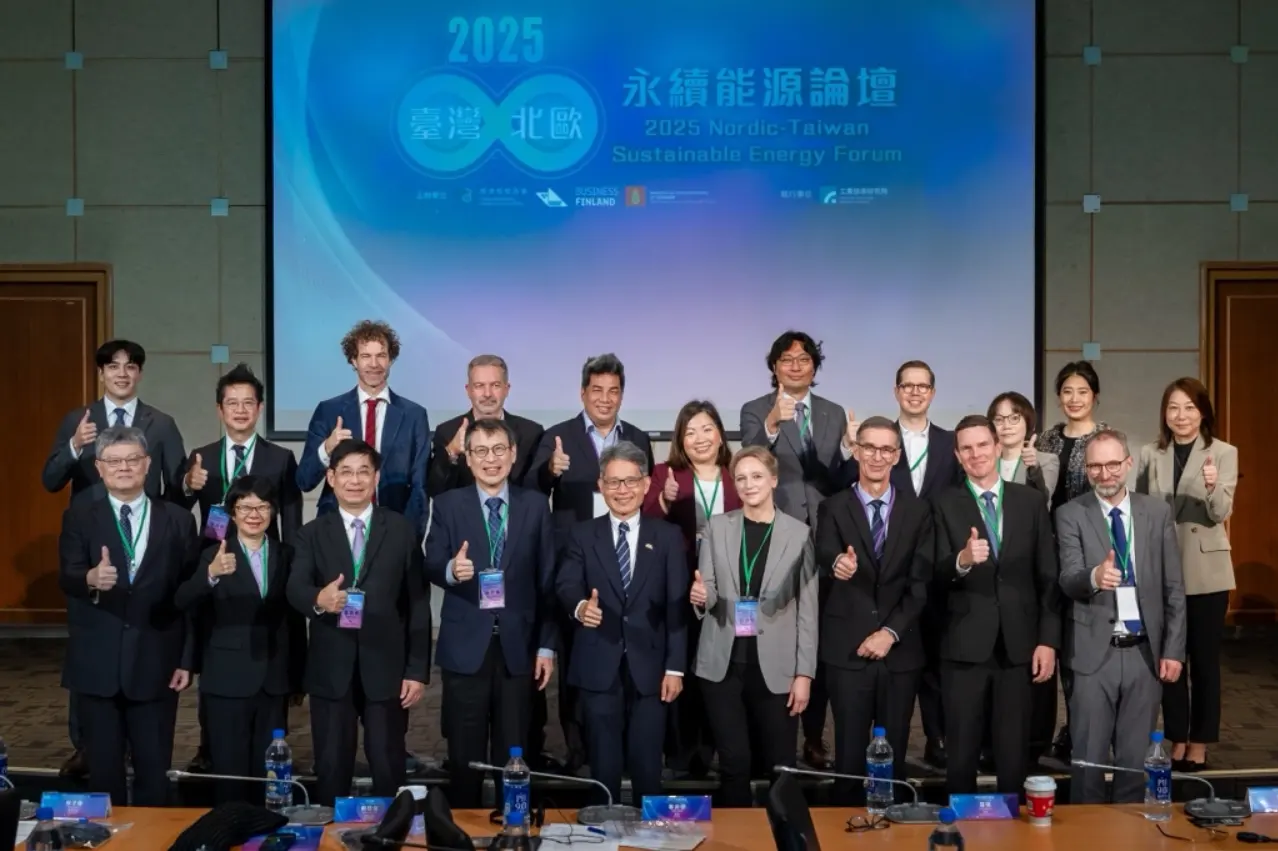
The forum opened with keynote presentations on power system resilience, featuring speakers from Taipower, Energinet (Denmark), Wärtsilä (Finland) and Energiforsk (Sweden). The first thematic session on offshore wind included insights from ITRI's Green Energy and Environment Research Laboratories, Ørsted, CIP and Vestas.
The second session on geothermal energy featured case studies shared by CPC Corporation, COWI (Denmark) and Baseload Capital (Sweden).
The third session highlighted decarbonization and emerging energy technologies, with presentations by National Taiwan Ocean University, ITRI, Minesto (Sweden) and Everllence (Denmark) on marine energy, green fuels and related innovations. More than 200 participants from government, industry, academia and research attended the forum, engaging in active and in-depth discussions across all topics.
The Energy Administration stated that in the midst of the global net-zero transition, countries face shared challenges ranging from energy security to industrial decarbonization. With Taiwan's innovation capacity and ambitious transition policies, combined with the Nordic region's advanced technologies and deep experience, the forum provides a critical platform for strengthening partnerships in renewable energy diversification, system resilience and low-carbon technologies. The agency expressed hope that Taiwan and the Nordic nations will continue expanding collaboration and work with more global partners to advance a sustainable energy future.
