

Energy Transition 2.0 Is Not a Vision — It Is Now Operational How Behind-the-Meter Virtual Power Plants Will Become a Pivotal Force in the New Compute Era

Energy Transition 2.0 Is Not a Vision — It Is Now Operational How Behind-the-Meter Virtual Power Plants Will Become a Pivotal Force in the New Compute Era
By George Hsu, Xin-En Wu
At Taiwan's 2024 National Day Ceremony, President Lai Ching-te formally declared the launch of the nation's Second Energy Transition. With renewable energy penetration rising rapidly — and intermittency challenges becoming more pronounced — Taiwan now faces a new era of grid stability and resilience. "Energy Transition 2.0 is not an abstract aspiration. It is the reality we are already living in." Ming-Hsin Kung, the Minister of Economic Affairs says.
Holding a PhD from National Chung Hsing University, Kung has long been involved in industrial economics, technology governance, and public policy. His tenure across the National Development Council and Executive Yuan has shaped his policy philosophy: regardless of the energy system in place, economic efficiency, policy governance quality, and social equity must be upheld simultaneously.

Kung Ming-Hsin, currently serving as Minister of Economic Affairs, holds a Ph.D. in Economics from National Chung Hsing University. He has long been engaged in industrial economics, technology governance, and public policy research, and has accumulated extensive experience through positions at the National Development Council and the Executive Yuan.
Creating Multi-Win Outcomes as the Core Value of Energy Policy
Kung states that the essence of energy policy lies in institutional design, and that its core value is to create multi-win outcomes rather than zero-sum competition. He emphasizes that throughout his longstanding research in industrial development and public policy, he has consistently focused on three fundamental values: economic efficiency, policy governance, and social equity. Confronted with today's energy transition and the restructuring of global industrial supply chains, these three key indicators must be reexamined through an entirely new lens.
He further explains that economic efficiency is no longer defined merely by cost–benefit calculation, but by the overall combined effectiveness among diverse energy types and policy instruments — including conventional large-scale generators, emerging renewable sources, distributed energy resources (DER), and virtual power plants (VPP). Each model fulfills a distinct role, and their overall efficiency must be reassessed from a system-wide perspective.
Secondly, the core of policy governance lies in institutional design. Facing the challenges brought by energy diversification, the shift to direct current systems, and digitalization, governance models must transition from conventional centralized regulation toward a new architecture that embodies flexibility, speed, and innovation. Such a framework must not only support the stability of the main grid, but also enable behind-the-meter resources to enter the market and participate in dispatch operations.
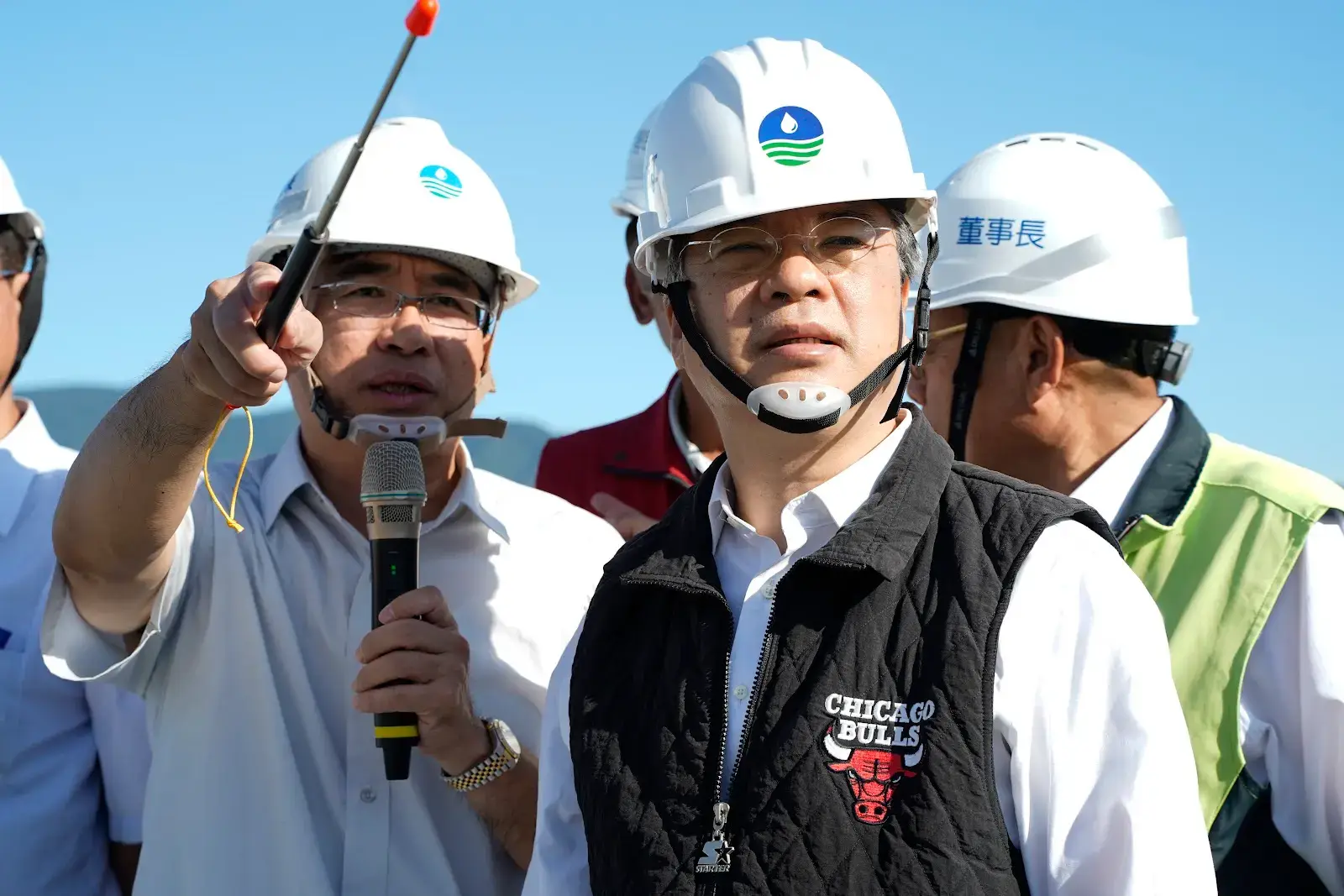
Kung emphasizes that Energy Transition 2.0 is not an abstract vision, but a reality already taking place.
At a moment when energy transition is accelerating and technology is driving a transformation in governance, the concurrent observation of economic efficiency, policy governance, and social equity forms the foundation for building Taiwan's next era of energy governance.
Taiwan's historical power system was built upon large-scale centralized power plants. These stable baseload units have sustained the nation's economic growth for decades and remain an indispensable foundation. However, Kung also notes that the rise of renewable energy introduces new characteristics — intermittency, direct current infrastructure, and distributed development (DER) — requiring the power system to become more flexible and more intelligently governed.
"The stability of traditional baseload units and the distributed resilience of renewable energy are complementary, not mutually exclusive." Kung says.
Kung stresses that modern energy governance should not position these resources at opposite ends of the spectrum, but rather regard them as different functional components of a single integrated system.
"This generation's energy policy can no longer be guided by the mindset of the previous generation," Kung says with emphasis.
Behind-the-Meter Resources as the New Strategic Battleground
Discussing energy system reform, Kung asserts that Taiwan must fully leverage the dynamism of the private sector — particularly the resources behind the meter. This is not a framework that Taipower can accomplish alone. With the arrival of the renewable energy era, the electricity market fundamentally requires an entirely new set of rules, a redefinition of policy roles, and transaction platforms capable of integrating diverse resources — of which Virtual Power Plants (VPPs) are the most representative example.
He further emphasizes that if Taiwan's energy transition is to genuinely succeed, the key does not lie solely in large-scale energy developers, but in hundreds of thousands of locally rooted, agile, and innovative SMEs.


Expand your horizons with a paid view:
- Get an exclusive sneak peek at the latest chapter updates.
- Purchase your first magazine NOW!
Already a member? Click here to log in
More related articles
