

From Wind Farms to a Maritime Nation: Taiwan's Decade-Long Journey from Offshore Wind Deployment to Ocean Power
From Wind Farms to a Maritime Nation: Taiwan's Decade-Long Journey from Offshore Wind Deployment to Ocean Power
Ten years ago, when Taiwan first drew block-shaped zones off its western coast for offshore wind development, few realized that those markings were more than the outline of several turbines—they were the starting point of a structural shift in how Taiwan relates to the ocean.
Today, as the first round of offshore wind farms gradually achieve grid connection, the sector appears unsettled—pressured by rising costs and intensifying global competition. Over the past decade, Professors Wen-Ling Hung and Chih-Ping Wang of the Kaohsiung University of Science and Technology have observed this industry through academic debates, field research, and national projects. Their reflections now point beyond wind turbines toward a larger question: What kind of maritime nation does Taiwan intend to become?
Taiwan's Real Offshore Wind Question: Do We Want Wind Farms, or a Full Industrial Ecosystem?
"The real question," Hung begins bluntly, "is whether we want the people needed for this wind farm, or the people needed for this industry."
She acknowledges that in the previous decade, both government and industry "did deliver results" in terms of getting wind farms built.
"But from a longer horizon," she notes, "you realize time and steps were lost. Because we never asked clearly from the beginning: are we here for electricity, or for an industrial ecosystem?"
If Taiwan only wants "wind farms," the simplest approach is to bring in the most experienced international developers and contractors, deliver the project, and Taiwan merely receives the power and pays the bill. This path minimizes risk, speeds up construction, and yields excellent short-term KPIs.
But if the goal is to develop something akin to Korea's shipbuilding trajectory—absorbing orders, bringing back know-how, building experience, and eventually shifting from subcontracting to leading—then wind farms are no longer mere energy assets. They become training grounds for maritime engineering, supply-chain integration, and cross-sector governance.
Wang draws an analogy with semiconductors: "Even the most profitable sector we have today did not appear overnight. The so-called ‘small, niche group' in the 1960s and 70s had no idea they were building what would eventually become a national-security industry. That took 30–40 years."
He urges people to view offshore wind through the same timescale:
"Do we expect a highly complex new industry to demonstrate full domestic capability within a decade? If we only look at the present, of course we become anxious. The real question is: is our current layout aligned with where we want to be 30 years from now?"
This is not only a policy or technical issue, Hung adds—it is a mindset issue.
"When policy teams are not operating from a foundation of long-term continuity, they tend to prefer outcomes that are visible and immediate. Which means resources are allocated to whoever delivers the quickest and easiest-to-explain results."
The short-term KPI mindset turned offshore wind into a "build fast, generate fast" project rather than a long-term industry worth cultivating. Once the focus narrows to the wind farm alone, the broader opportunities—marine governance, offshore platform engineering, blue-economy strategy—are easily pushed aside.
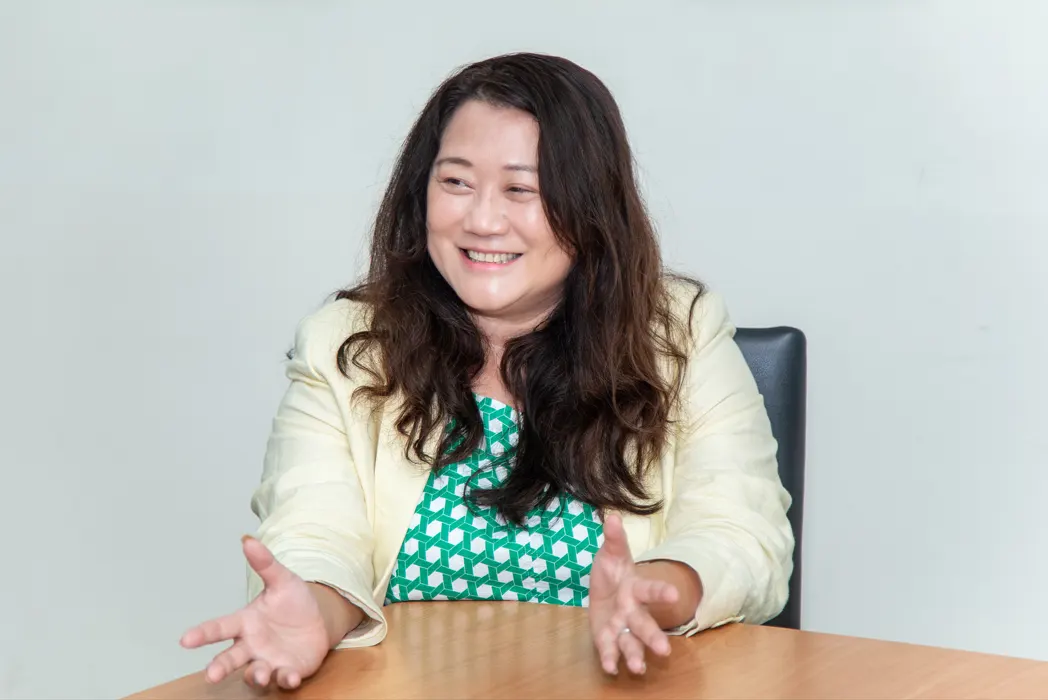 Wen-Ling Hung, Professor of Department of Naval Architecture and Ocean Engineering, Kaohsiung University of Science and Technology (NKUST)
A Broken Talent Pipeline: The Missing Link from 15-Year-Old Students to Offshore Professionals
When discussing talent, Hung often uses a thought experiment she calls the "ten-year rewind."
"If we want a group of 25-year-olds to stand firmly in the offshore wind and maritime sector ten years from now," she says, "then ten years earlier, they were 15-year-old ninth graders."
In her view, a healthy talent pathway would look like this:
Junior high and high school: early exposure to "ocean," "energy transition," and "offshore wind," supported by Taiwan's 108 Curriculum's focus on inquiry, field visits, and project-based learning.


Expand your horizons with a paid view:
- Get an exclusive sneak peek at the latest chapter updates.
- Purchase your first magazine NOW!
Already a member? Click here to log in
More related articles
