

The Future of Negotiation Theatre: An Innovative Convergence of Art, Social Science, and Public Engagement
The Future of Negotiation Theatre: An Innovative Convergence of Art, Social Science, and Public Engagement
By Xin-En Wu, Ru-Wei Chen
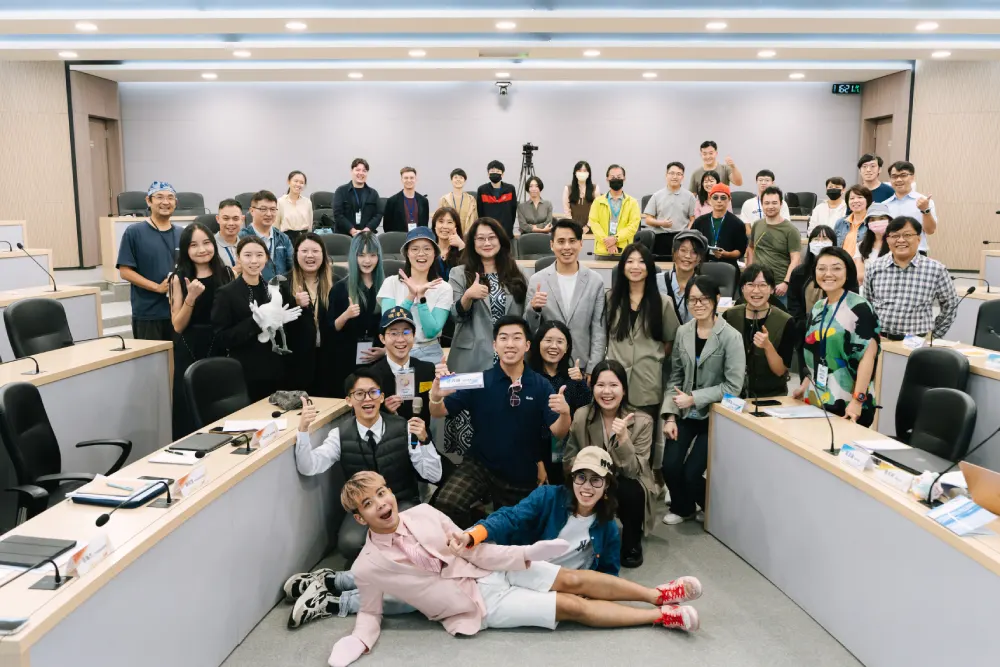
On November 4, 2023, the virtual Township Office of Taihu, Changhua County, served as the stage for the Negotiation Theatre team from National Chengchi University. The facisionating "Negotiation Theatre: Offshore Wind Power in Progress" was a situational show performed by students from the International College of Innovation and citizen actors, depicting the challenges and opportunities of offshore wind power in Taiwan. The goal was to help student actors understand the challenges that offshore wind power development poses to various stakeholders and to showcase the complexities of social communication surrounding this issue.
Chih-Yuan Yang, an Assistant Professor at the International College of Innovation, who has participated in hosting the event 6 times over the past 4 years, stated that all the designs and performances have their specific focuses. The objectives of the Negotiation Theatre include the visibility of STS (Science, Technology, and Society) education, public engagement, and artistic performance. These three aspects inherently contain potential conflicts, but it is such a dynamic nature that makes the performance unique, innovative, and significant.
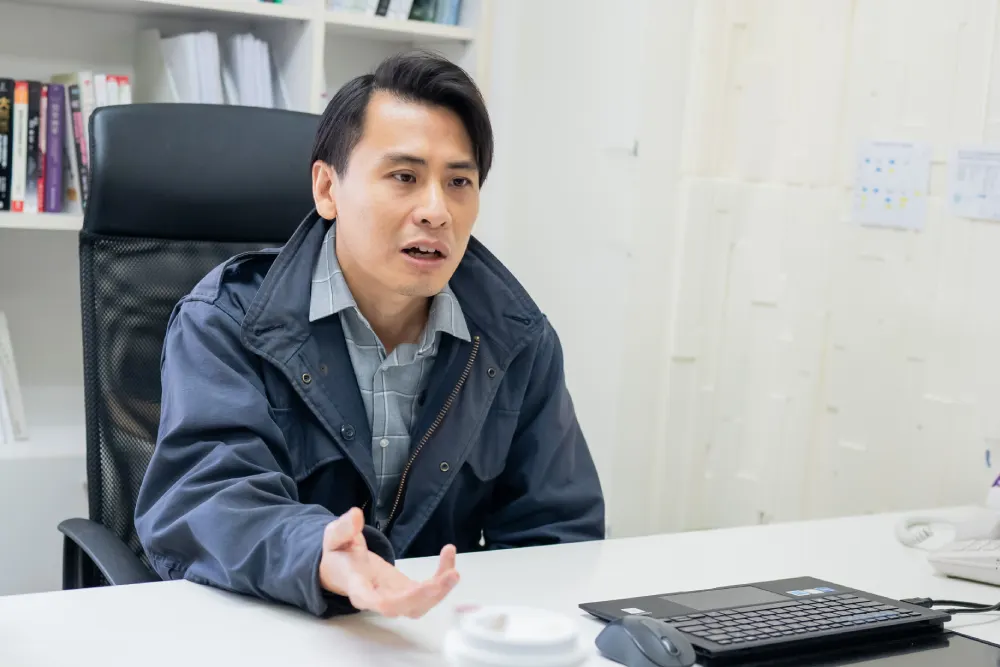
Chih-Yuan Yang, Assistant Professor of the International College of Innovation, National Chengchi University
Multiple Goals of Negotiation Theatre
"We aim to achieve three goals, each of which contains potential conflicts. Since 2020, when I was a postdoc at the Institute of Sociology at Academia Sinica, we have conducted numerous operations," Yang stated. "Initially, we addressed two issues: nuclear waste on the Northern Coast and offshore wind power. The event at the Northern Coast issue primarily involved students from the National Kaohsiung University of Science and Technology, whereas the offshore wind power issue was targeted at students from National Chengchi University. Students from Kaohsiung University predominantly had engineering backgrounds, but after transferring to Chengchi University, I noticed that the students were more enthusiastic about social relationships, prompting a different format. This is the context of our operations in Taiwan. We developed this unique teaching method at the International College of Innovation, especially in addressing offshore wind power. I have since conducted this project several times, and this is the fourth iteration."
Yang emphasized that such inferences came from the accumulated experiences and facts through research. The expertise in theatre design also requires accumulation, including understanding the stakeholders of offshore wind power in Taiwan, details of incidents over the years, and knowledge in experiences, while technical aspects of theatre design also require construction, including scene schedules, character descriptions, costumes, and plot development. Additionally, key characters in the theatre need specialized design, which pertains to the professional aspects of stage performance.
"This is also part of STS research, particularly controversy studies. When STS emerged in Europe in the 1980s, it focused on social-technological controversies such as intercontinental missile tests. Offshore wind power, as a large socio-technological system, is also a classic STS research subject." Yang further explained that the Negotiation Theatre primarily explored socio-technological issues rather than purely social ones. Socio-technological issues are from social-technological systems and impact modern society deeply. Taking offshore wind power as an example, it has far-reaching effects on various societal levels, highlighting the interplay between social issues and technological aspects. People's choices of technological systems are essentially influenced by social values and local political landscapes.
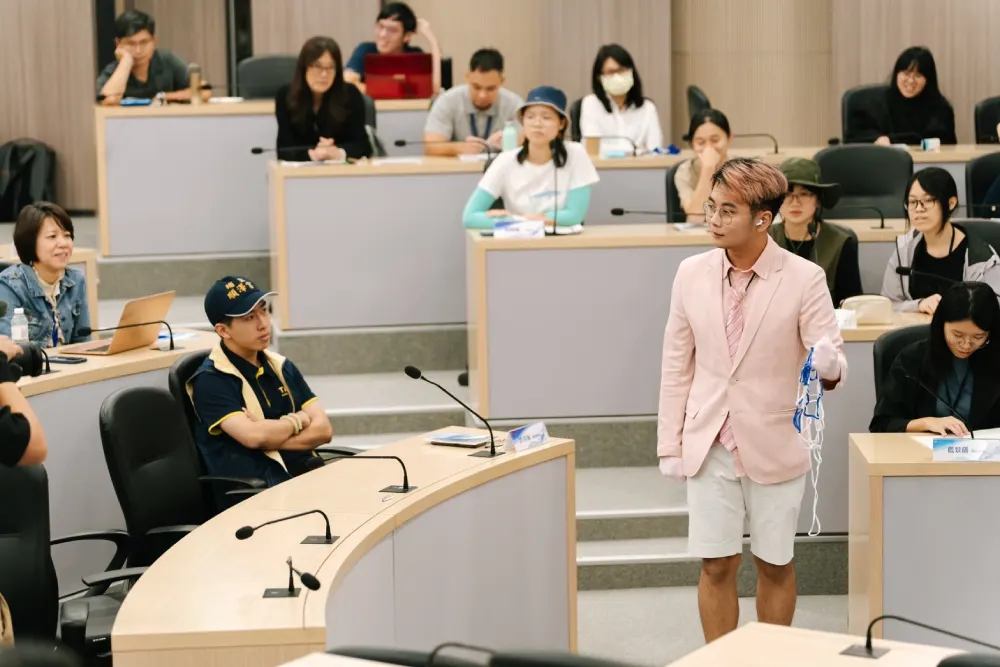
Progress" offers an in-depth exploration of the ecological, fisheries, and local development dimensions of offshore wind power projects. Through role-playing, students and citizen performers assume the perspectives of diverse stakeholders, staging authentic dialogues that mirror real-world controversies. By engaging directly with the audience, the performance facilitates informal negotiation, alliance-building, and collective reflection on possible future pathways. At the same time, the event brings together scholars, students, NGOs, and civic participants concerned with marine conservation, coastal community development, and blue carbon issues. Through structured issue mapping and deliberative dialogue, participants examine the challenges of achieving a just transition as renewable energy expands into coastal communities, and work collaboratively to articulate solutions that promote coexistence, shared prosperity, and long-term sustainability.
An Integrative Preparatory Phase Grounded in Social Science
The preparation for the two-day Negotiation Theatre performance spanned twelve weeks, drawing on years of accumulated experience to streamline the process. During the preparation, three public lectures, two body and voice workshops, one field research session in Changhua, and five stakeholder interviews with group leaders were held.
"We initiated project preparation in mid-August. With the support of research project funds from the National Science and Technology Council of Taiwan, we have developed a comprehensive understanding of the stakeholders, experiential details, and knowledge topics in related fields. For students, simply reading written materials is insufficient to grasp the complexity of the reality and the social dimensions of the knowledge topics. The value of the topics lies in their connection to people's lives and cultural values, making them inherently incomplete, multifaceted, contextual, thus requiring more negotiation to be fulfilled," Yang said.
Yang emphasized that determining who to invite is also an integral part of social sciences, which is knowledge gained through fieldwork and post-issue engagement. Although both topics involve fishery rights negotiations or local communication, their expressions and perspectives differ significantly. The final public lecture featured the Taiwan Cetacean Society, addressing an ongoing issue since the 2016 environmental assessment. Despite the shifts in focus, the cetacean issue remains crucial in the public eye. Through these activities, we aim to enable students to experience the multi-perspective approach emphasized by STS research.
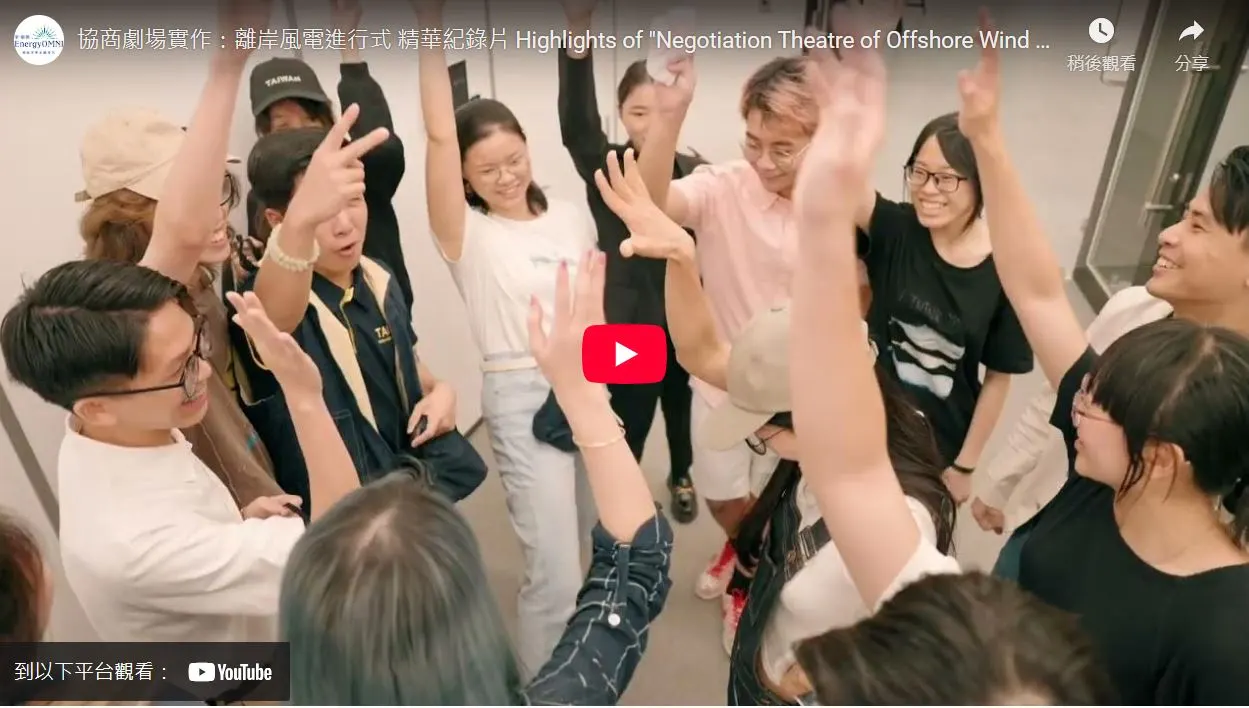
Yang argues that characters in theatrical creation are not intended to be one-to-one representations of individuals who exist in society, but rather composites shaped by multiple lived experiences. While artistic work does require a degree of authenticity, this authenticity is inherently plural: it allows for diverse perspectives, yet must remain anchored in reality. Detaching from factual grounding or drifting into fabrication, he stresses, risks turning art into a form of misleading advocacy rather than a credible medium for public dialogue.
Before the lectures, Yang led students (group leaders) on a field research trip to Changhua. Many group leaders had taken related courses before because, given the short preparation period, prior exposure and operational knowledge were essential for quicker adaptation. Past experiences have proven that Negotiation Theatre is resource-intensive, requiring intensive discussions between teaching assistants and students.
For the group leaders, who will also serve as teaching assistants for future courses, Yang hopes to strengthen their practical interaction experience with local stakeholders, hence the field research arrangement. Along with the three public lectures, they engaged with local stakeholders, conducted local experience inquiries, and participated in in-depth interviews.
"We interviewed the Matsu Fish Workers Conservation Alliance and a local social enterprise, Port Fish, representing the role of local returnee youths. We had a thorough three-hour conversation, understanding their inner struggles, and found that even residents of coastal towns may not be very familiar with the ocean, as their lives are still primarily land-based," Yang said.
Yang highlighted that these interviews revealed the significant impacts of the interaction between township life and offshore wind power projects, a point often overlooked by developers. This presents an opportunity for everyone to truly see their township. "This is a very important opportunity. We cannot assume that the locals are intimately familiar with the history of their home," Yang stated.
Opening Space for Negotiation and New Ways of Thinking
"As we witness the development of democracy in Taiwan, we have entered the critical moment of the energy transition, which means the future public participation and discussions need to be deeper, smarter, and of higher quality. We need innovative methods, including social methodologies, and theatre holds potential in this regard," Yang asserted.
Yang explained that by involving civic groups in scripting to facilitate civic engagement, they became active participants in the theatre preparation. This is a negotiation process. For instance, relevant groups can review and provide feedback during scriptwriting or role development, making it an interactive process that reflects complex empirical facts.
Characters in the script may not fully reflect real people in society, but they are a synthesis of diverse experiences. While artistic creation requires a certain degree of authenticity, such authenticity is multifaceted and can have different layers of perspectives. At the same time, we must remain loyal to reality to avoid false propaganda.
Yang reiterated that STS research values multiple perspectives, recognizing that reality is multifaceted and coexistent. "Whether it's research or art creation, we always attempt to incorporate two, three, or even four different perspectives, which is a core concept of STS."
Yang believed that such performances are an artistic expression that can help the public understand how complex the situation is. In a democratic society, we should not view controversies in a unitary or one-sided oppositional manner.
"Unfortunately, populism is characterized by its tendency of zero-sum thinking, which simplifies issues into good versus bad or heroes versus villains rhetoric, but such an approach always jeopardizes any public discussion. Our discussion on technical and social issues must maintain a close alignment with reality, so that we can acknowledge what progress has already been made. This is why I always emphasize the importance of the landscape. The landscape is a tangible entity, a solid foundation, and our discussion does not take place in a vacuum. Recognizing effective solutions can enrich our discussions rather than lead to opposition."
Yang hoped that the "Negotiation Theatre: Offshore Wind in Progress" will showcase an alternative way of public participation, integrated into aspects of future offshore wind power development, such as engineering design, ecological impact monitoring, and social communication. Yang aimed to stimulate ongoing negotiations that shall continue in the future.
More related articles
