

"Marine Team Taiwan – Marine Engineering Industry Development Forum" Brings Government, Industry, Academia and Research Together to Shape the Future
"Marine Team Taiwan – Marine Engineering Industry Development Forum" Brings Government, Industry, Academia and Research Together to Shape the Future
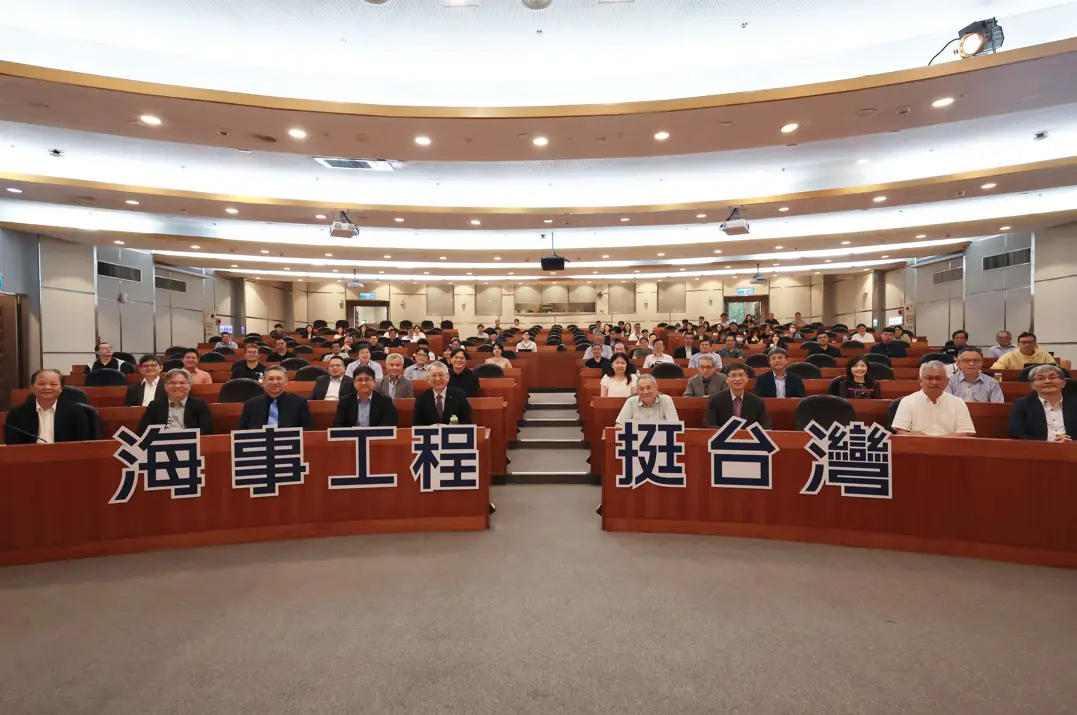
Over nearly a decade, Taiwan's marine engineering industry has expanded from port and nearshore construction into offshore wind, gradually establishing capabilities in vessels, construction, operations and maintenance (O&M), and local supply chains.
As Taiwan enters the next stage of its energy transition, with growing demand driven by AI-related electricity consumption, floating offshore wind, ocean energy, carbon storage and marine spatial planning, the National Marine Engineering Association (NMEA) held the "Marine Team Taiwan – Marine Engineering Industry Development Forum" (海事工程挺臺灣-海事工程產業發展座談 2026) in Taipei on September 16. Bringing together representatives from industry, government, academia and research institutions, the forum highlighted that Taiwan's marine engineering industry is at a critical turning point. Beyond securing the domestic market, the industry must build a comprehensive ecosystem encompassing the supply chain, talent and institutional frameworks, while leveraging Taiwan's accumulated expertise to expand into Asia-Pacific and international markets.
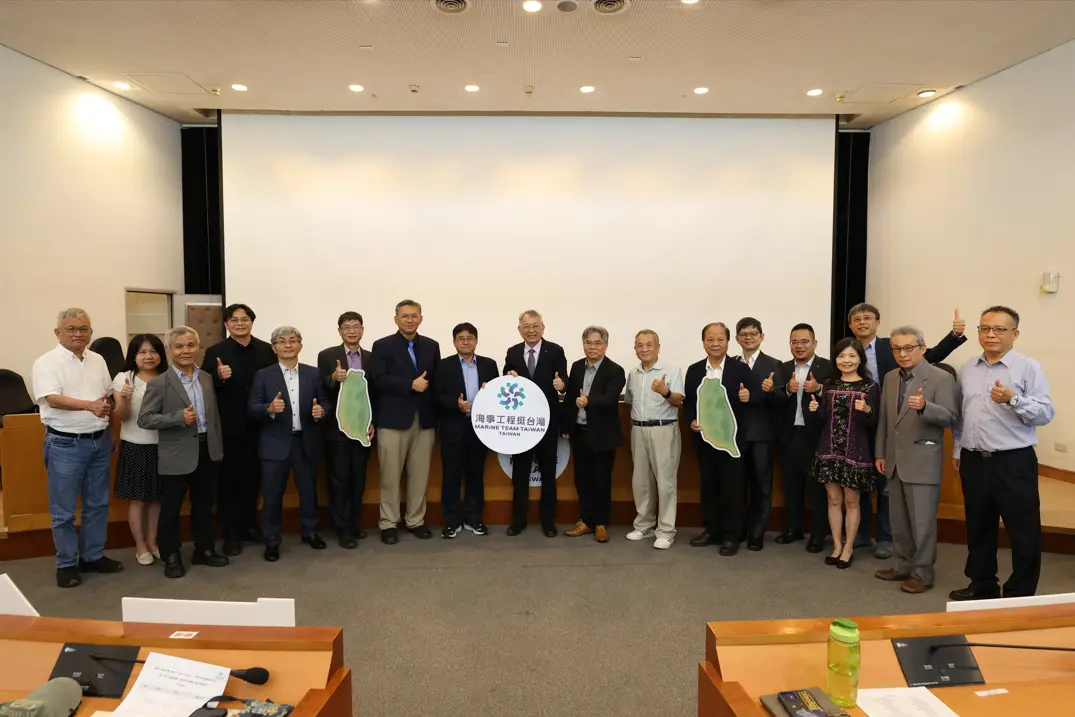
Initiated by the marine engineering industry, the forum brought together representatives from the Ocean Affairs Council (OAC), the Energy Administration under the MOEA, the Maritime Port Bureau (MOTC), CSBC Corporation, Taiwan, the Industrial Technology Research Institute (ITRI), as well as industry associations covering marine, wind energy and marine engineering.
Participants generally agreed that offshore wind over the past decade has provided Taiwan's marine engineering industry with a critical market and practical environment for transitioning from nearshore to offshore operations. It has also helped transform previously fragmented capabilities in shipbuilding, heavy steel structures, vessels, ports, engineering and marine expertise into an increasingly integrated industrial cluster.
Robert Tseng (曾國正), Chairman of the NMEA, which initiated the "Marine Team Taiwan" initiative, said Taiwan's marine engineering industry has established an important foundation through the development of offshore wind over the past decade. There are now approximately 120 Taiwan-flagged vessels supporting marine engineering activities. The coming years will be critical for determining whether the industry can move beyond its foundation-building phase and achieve greater scale. Marine engineering will no longer support offshore wind alone, but could also encompass port development, energy projects, marine infrastructure, subsea engineering, and the energy and infrastructure required to support AI-driven growth and the low-carbon transition.
Tseng noted that major European marine engineering companies have often expanded from dredging and port construction into offshore energy, oil and gas, deepwater engineering and carbon dioxide storage, demonstrating the sector's potential for cross-sector and long-term development. For Taiwan, the first decade has focused on building capabilities; the next priority is to transform the industry into an emerging sector capable of supporting the country's long-term infrastructure needs while competing internationally.
OAC: Marine Engineering Now Linked to Energy Resilience, the AI Economy and National Security
Hsin-Hsou Wu (吳欣修), Administrative Deputy Minister of the OAC, said from a broader national development perspective that as investment in AI technologies increases, energy resilience has become a critical foundation for industrial development, further elevating the importance of marine engineering.
From offshore wind and energy transmission to port facilities, workboats, survey vessels and other marine infrastructure, marine engineering is no longer simply a construction-related industry, it is increasingly interconnected with Taiwan's energy resilience, marine industries and national security.
Wu also noted that as Taiwan's use of marine space expands, more comprehensive institutional frameworks will be required to govern the use and management of territorial waters and exclusive economic zones, as well as marine spatial planning. The OAC is also willing to consolidate and coordinate cross-ministerial issues currently facing the industry and establish a more stable dialogue mechanism between the government and industry.
Energy Administration: "Marine Team Taiwan" Along With the Government's Full Support on Marine Engineering
Chung-Hsien Chen (陳崇憲), Deputy Director-General of the Energy Administration, said that "Marine Team Taiwan" could also be accompanied by another message: "The Taiwan government supports marine engineering."
Chen noted that Taiwan's offshore wind industry has evolved from having virtually no operational wind farms a decade ago to more than 500 offshore wind turbines with installed capacity approaching 5 GW. Throughout this development, the marine engineering industry has played an indispensable supporting role. Taiwan has also progressed from a sector primarily focused on ports and nearshore construction to one with genuine offshore engineering experience, with some companies already beginning to export their capabilities overseas.
Domestic offshore wind will remain an important foundation for the marine engineering industry. Chen said the government will continue to increase offshore wind capacity, with planned capacity by 2035 moving toward nearly 20 GW. The government subsequently plans to release capacity in four-year increments of 8 GW.
However, he stressed that future marine engineering opportunities will extend beyond fixed-bottom offshore wind. Floating offshore wind, ocean energy, offshore engineering associated with CCS (carbon capture and storage) and CCUS (carbon capture, utilization and storage), as well as multi-use marine spaces, will create new engineering requirements and technical challenges. The government and industry must maintain a partnership and jointly build the capabilities required for the next stage through coordinated market development and policy support.
From "Owning Vessels" to Building a Complete Industrial Chain: Talent, O&M and Institutions Become the Next Priorities
Steven Lin (林煜閔), Executive Director of the T-Wind Marine Association (臺灣離岸風機基礎暨海事工程協會), said Taiwan has progressed within just a few years from having no comprehensive offshore wind marine engineering capabilities to establishing a fleet and domestic supply chain—an achievement that has attracted considerable attention from the international industry.
However, Lin stressed that marine engineering is not simply a matter of "owning vessels." A mature industry requires an integrated system encompassing vessel maintenance, onshore logistics, supply chains, professional services and skilled personnel. Taiwan has established the foundation, and the next step is to expand the industry's scale. It cannot rely on only a handful of companies; instead, stakeholders must "fight as a team" and build a globally competitive Taiwan team capable of entering marine engineering markets in Japan, South Korea, Europe and other regions.
Wei-Hsien Lu (呂威賢), Secretary-General of the Taiwan Wind Energy Association (臺灣風能協會), also noted that Taiwan has historically trained many professionals in marine engineering. However, before the emergence of the offshore wind market, relatively few actually entered the marine engineering sector. Offshore wind over the past decade has enabled Taiwan to establish the foundations of a marine engineering industry, but the challenges of the next decade could be greater, as the industry must not only consolidate its position in the domestic market but also compete for opportunities across the Asia-Pacific region.
Talent will therefore be a key priority for the industry's next stage. Cheng-Hung Chen (陳政宏), Chairman of CSBC Corporation, Taiwan (台船), said marine engineering is fundamentally a highly integrated industry involving large-scale steel structures, vessels, energy, environmental applications and diverse engineering technologies. Taiwan's shipbuilding industry has possessed large-scale steel fabrication capabilities for decades. Drawing on the development experiences of Japan and South Korea, shipbuilding and large-scale marine engineering capabilities could be further extended into heavy industry, energy and other infrastructure sectors.
Chen said that in addition to government policy support, the industry must help society and younger generations understand the opportunities presented by marine engineering. Talent development and industry awareness should be strengthened beginning at the high-school, university and teacher levels.
Wind Farms Enter O&M Phase: Local O&M Capabilities and Certification Systems Draw Attention
Yung-Fang Chiu (邱永芳), Chairman of The Association of Marine Affairs Chinese (中華海洋產業協會) said Taiwan's marine engineering activities over the past several decades were largely concentrated in nearshore and port projects, while offshore wind enabled the industry to truly "move from shore to sea." As a large number of wind turbines have now been installed and progressively entered the maintenance and operational phase, Taiwan must develop more comprehensive maintenance, engineering and supply-chain capabilities.
Given Taiwan's distinctive marine environment, including typhoons, earthquakes and complex geological conditions, the importance of local O&M capabilities will continue to increase.
Chiu also called for Taiwan to establish a more comprehensive domestic certification and talent system for marine engineering professionals. While aligning with international standards, Taiwan should also ensure that opportunities for local talent and industry development remain in Taiwan. Over the long term, if marine engineering remains confined to the domestic market, its growth potential will be limited. Taiwan must therefore leverage its accumulated engineering capabilities and expand them into overseas markets.
ITRI: Industry, Government, Academia and Research Have Built a Strong Foundation, Technical Capabilities Must Continue to Deepen
Tzu-Ya Liu (劉子衙), Strategy Director of ITRI's Green Energy and Environment Research Laboratories, said Taiwan's offshore wind industry has reached its current scale within a relatively short period not only because of government policy, but also because of the efforts of frontline marine engineering companies. In recent years, ITRI has continued to develop technologies related to offshore wind O&M, including marine meteorology and intelligent sensing, with the aim of further integrating these technologies into industry applications.
Liu said the progress achieved to date is the result of joint efforts by industry, government, academia and research institutions. As the industry continues to expand, engineering capabilities and technological R&D must advance in parallel.
From Offshore Wind Engineering to "National Marine Infrastructure Capabilities"
The views expressed by participants indicate that Taiwan's marine engineering industry is gradually moving from its first phase of "serving offshore wind" into a second phase focused on "building national marine engineering capabilities."
Offshore wind will remain a core market, but floating offshore wind, ocean energy, subsea engineering, port development, CCUS, energy transportation, marine surveys and other infrastructure associated with energy resilience and national security could emerge as new areas of application.
Taiwan's first decade of marine engineering development was driven by offshore wind. Over the next decade, the industry will face a broader question: not simply whether Taiwan can deliver marine engineering projects, but whether it can retain, scale and internationalize the capabilities it has built.
Whether the industry can achieve greater scale and become a high-value, high-productivity emerging strategic sector that expands from Taiwan into international markets will depend on more than the number of vessels. Policy stability, engineering track records, a comprehensive supply chain, professional talent, certification systems, marine governance and cross-ministerial coordination must mature in tandem.
The organizers and participating representatives from industry, government, academia and research institutions will continue to review and implement the recommendations identified at the forum through an ongoing, adaptive process. By systematically improving the industrial development environment, they aim to realize the vision and objectives of "Marine Engineering Supports Taiwan" and "Marine Team Taiwan" at the earliest opportunity.
Source: EnergyOMNI
Compilation & Ttranslation: EnergyOMNI
