

The British Office Taipei Publishes Offshore Wind Financing Report to Accelerate Taiwan's Green Finance Transition
The British Office Taipei Publishes Offshore Wind Financing Report to Accelerate Taiwan's Green Finance Transition
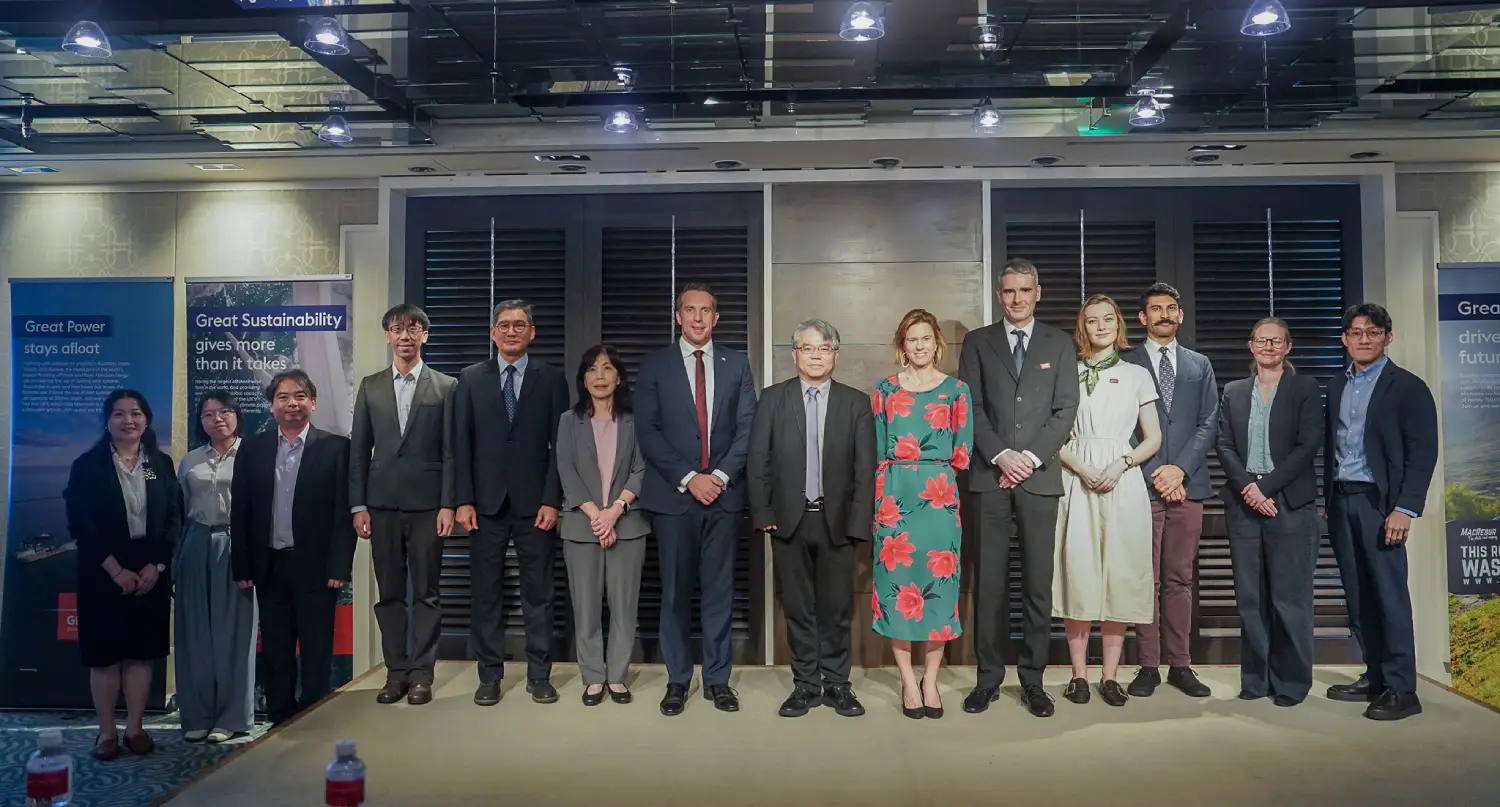
Resources: British Office Taipei
The British Office Taipei today (18th) jointly convened the "Taiwan Offshore Wind Financing Forum" in collaboration with KPMG Taiwan and the UK-based Carbon Trust, and released a commissioned report by KPMG titled "Structural Bottlenecks in Taiwan's Offshore Wind Financing and Participation Strategies for State-Owned Banks." The report provides an in-depth analysis of the institutional, technical, and risk assessment challenges faced by domestic financial institutions when participating in large-scale offshore wind projects. Drawing on the United Kingdom's mature market experience, it also proposes concrete strategic recommendations aimed at strengthening the capacity of Taiwan's financial system to support the energy transition.
Ruth Bradley-Jones, Representative at the British Office Taipei, noted that renewable energy cooperation has long been a cornerstone of UK–Taiwan economic and trade relations. Under the Enhanced Trade Partnership (ETP) framework, both sides have signed a pillar agreement on energy and net-zero emissions, marking a significant milestone in bilateral cooperation. Looking ahead, the UK will continue to support Taiwan's offshore wind sector through financial backing and knowledge exchange to facilitate large-scale industry development.

(Left) Representative of the British Office Taipei, Ruth Bradley-Jones; (Right) Director of Trade and Investment, British Office Taipei, Joel Derbyshire
(Resources: British Office Taipei)
As Taiwan's offshore wind sector enters Zonal Development Round 3, investment per project has increased substantially, alongside a growing reliance on domestic bank financing. At the same time, the widespread adoption of CPPA has reshaped risk allocation mechanisms, positioning financial institutions as increasingly pivotal actors in the energy transition.
KPMG highlighted that, as of September 2025, Taiwan had completed financing for 11 offshore wind projects, totaling USD 28.66 billion. However, while private financial institutions have demonstrated strong engagement, participation by state-owned banks remains comparatively limited. This is largely attributable to their traditional reliance on asset-based collateral or parent company guarantees. Under CPPA structures, repayment sources shift toward the creditworthiness of a single corporate offtaker, resulting in credit requirements that exceed international norms. Additionally, factors such as long investment tenors, capital adequacy regulations, and supervisory requirements further elevate barriers to entry.
During the forum, the Carbon Trust emphasized that, with appropriate risk mitigation mechanisms in place, banks are gradually becoming more receptive to emerging financing models. For instance, government-backed credit guarantees during the construction phase can enhance market confidence and stimulate investment momentum. Megan Smith, Director of Offshore Renewables at the Carbon Trust, remarked that Taiwan has established a leading offshore wind market in Asia; however, as the industry scales, the financial system's capacity to effectively manage risk will be critical. Clear long-term policy direction, stable and predictable revenue frameworks, and pragmatic risk-sharing instruments will be essential to enabling full participation by domestic banks and sustaining market growth.
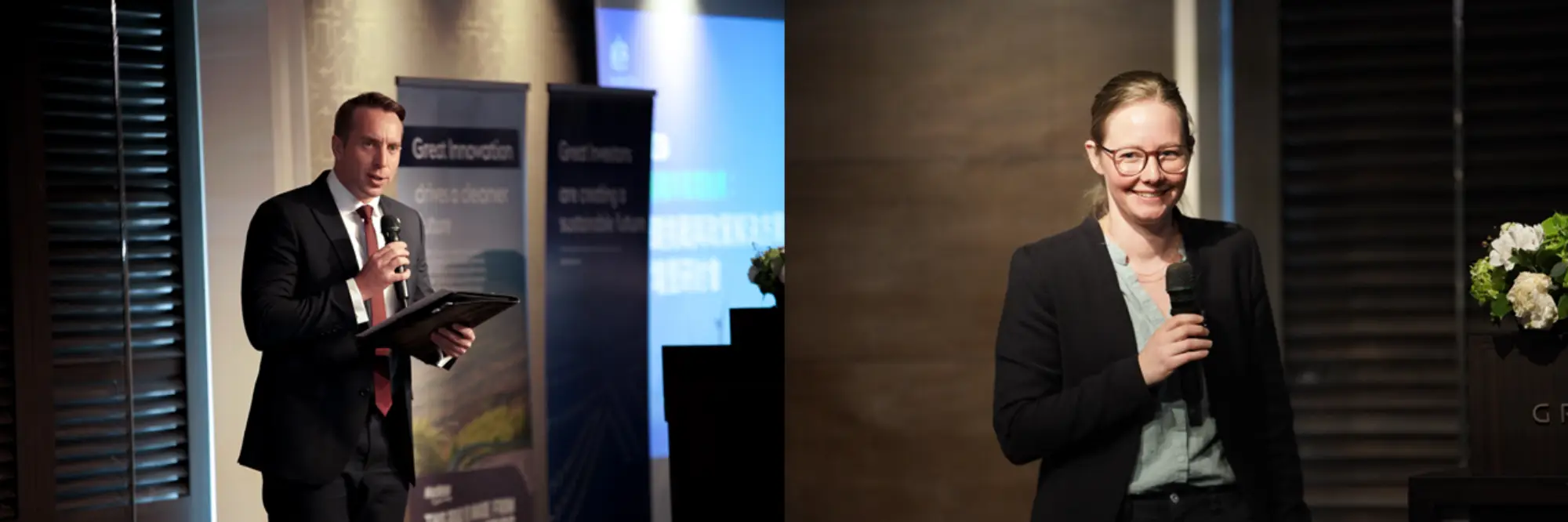
(Left) His Majesty's Trade Commissioner for Asia Pacific, Martin Kent; (Right) Director of Offshore Renewables at the Carbon Trust, Megan Smith (Resources: British Office Taipei)
Martin Kent, His Majesty's Trade Commissioner (HMTC) for Asia Pacific, stated that the UK has long supported Taiwan's offshore wind development. To date, UK Export Finance (UKEF) has provided £1.3 billion in financing guarantees for seven offshore wind projects in Taiwan—one of the UK government's most significant global investments—demonstrating strong confidence in Taiwan's industrial capabilities and market potential. The UK will continue to deepen cooperation with Taiwanese enterprises and financial institutions to jointly advance green finance.
As Taiwan progresses toward its 2050 net-zero emissions target, offshore wind has become a central pillar of its energy transition. The forum brought together representatives from industry, government, and the financial sector to explore concrete pathways for scaling up investment. David Bowden, Director of Trade and Investment at the British Office Taipei, underscored that participation by state-owned banks is both commercially sound and strategically beneficial, helping retain capital, expertise, and value within Taiwan's financial system while achieving a dual objective of energy security and industrial development.
