

Offshore Wind Round 3.3: Strengthening Financial Viability to Power a Sustainable Future
Offshore Wind Round 3.3: Strengthening Financial Viability to Power a Sustainable Future
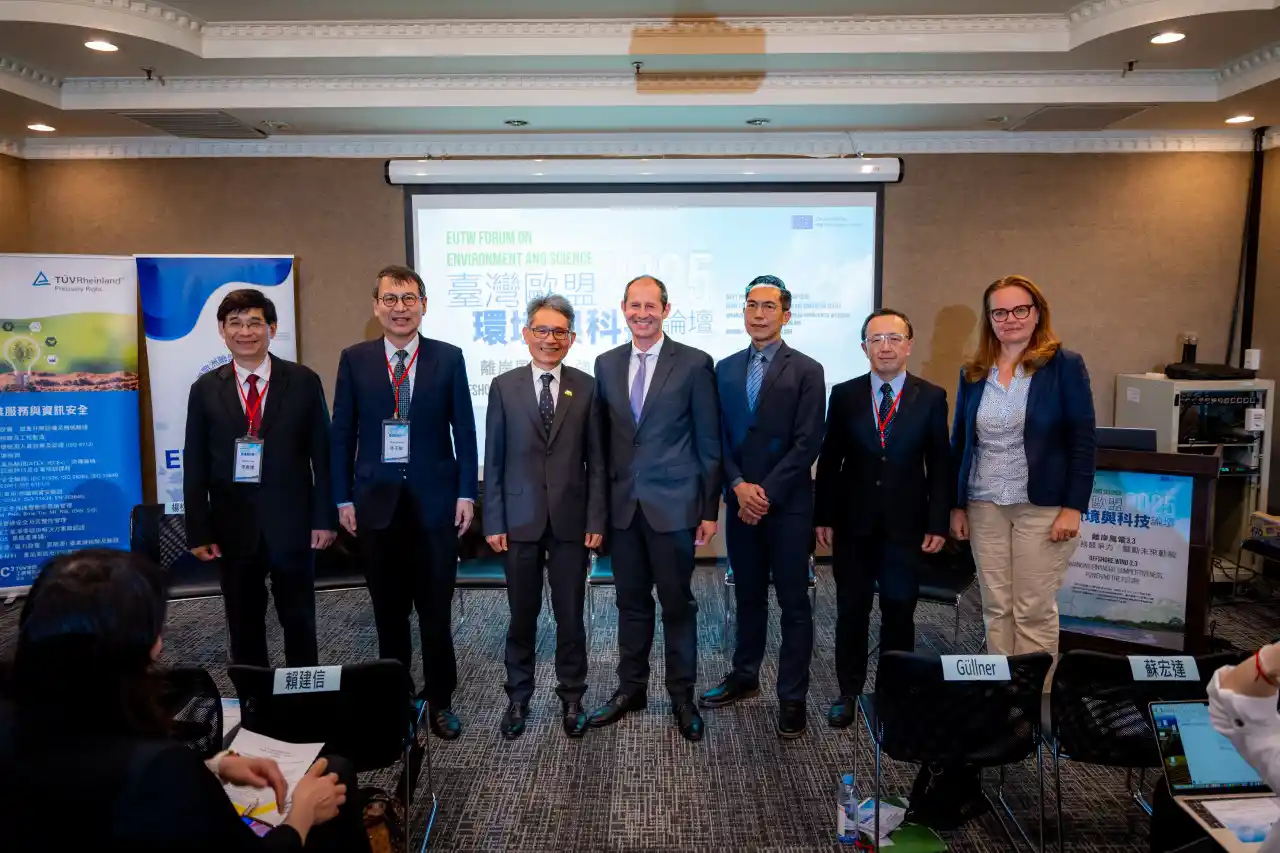
The 2025 Europe-Taiwan Forum on Environment and Science concluded successfully on June 12 at the NTU International Convention Center, focusing on Offshore Wind 3.3, AI data centers, and new renewable energy regulations. The event aimed to advance Taiwan's offshore wind policies to ensure a reliable supply of renewable energy for local industries and to fulfill Taiwan's global carbon reduction commitments.
This year's theme, "Offshore Wind 3.3: Enhancing Financial Competitiveness, Powering the Future," gathered government representatives from Taiwan and the EU, alongside industry, academic, and research leaders. Over 70 industry professionals attended, discussing the latest offshore wind policies, strategies to boost project competitiveness, energy resilience, and the EU's regulatory trends in response to AI-driven data center growth.
The forum opened with remarks from Vice Minister of Economic Affairs(MOEA) Chien-Hsin Lai, who emphasized that based on the Round 3.2 experience, the government will promote a more market-flexible and contract-feasible Round 3.3 development policy. Infrastructure will also be enhanced to increase investor confidence and establish a robust environment for offshore wind development.
Lutz Güllner, Head of the European Economic and Trade Office (EETO), noted that Taiwan currently has approximately 3 GW of grid-connected offshore wind capacity, with 86% coming from European developers. He expressed hope that Round 3.3 would further improve the policy framework, deepen Taiwan-EU cooperation, and enhance market attractiveness and project execution capabilities.
Professor Hung-Dah Su, Director General of the European Union Center in Taiwan (EUTW), stressed the importance of strengthening regulatory and policy alignment platforms between Taiwan and the EU and deepening collaboration among academia and industry to tackle the intertwined challenges of energy transition and digital infrastructure.
Jason Chang, Managing Director of TÜV Rheinland Taiwan, remarked: "Round 3.3 is crucial for rebuilding industry confidence. We observe strong industry expectations for policy stability and transparency in contract enforcement. There's also anticipation for Taiwan to align with global standards in technical specifications, cybersecurity verification, and sustainable governance."
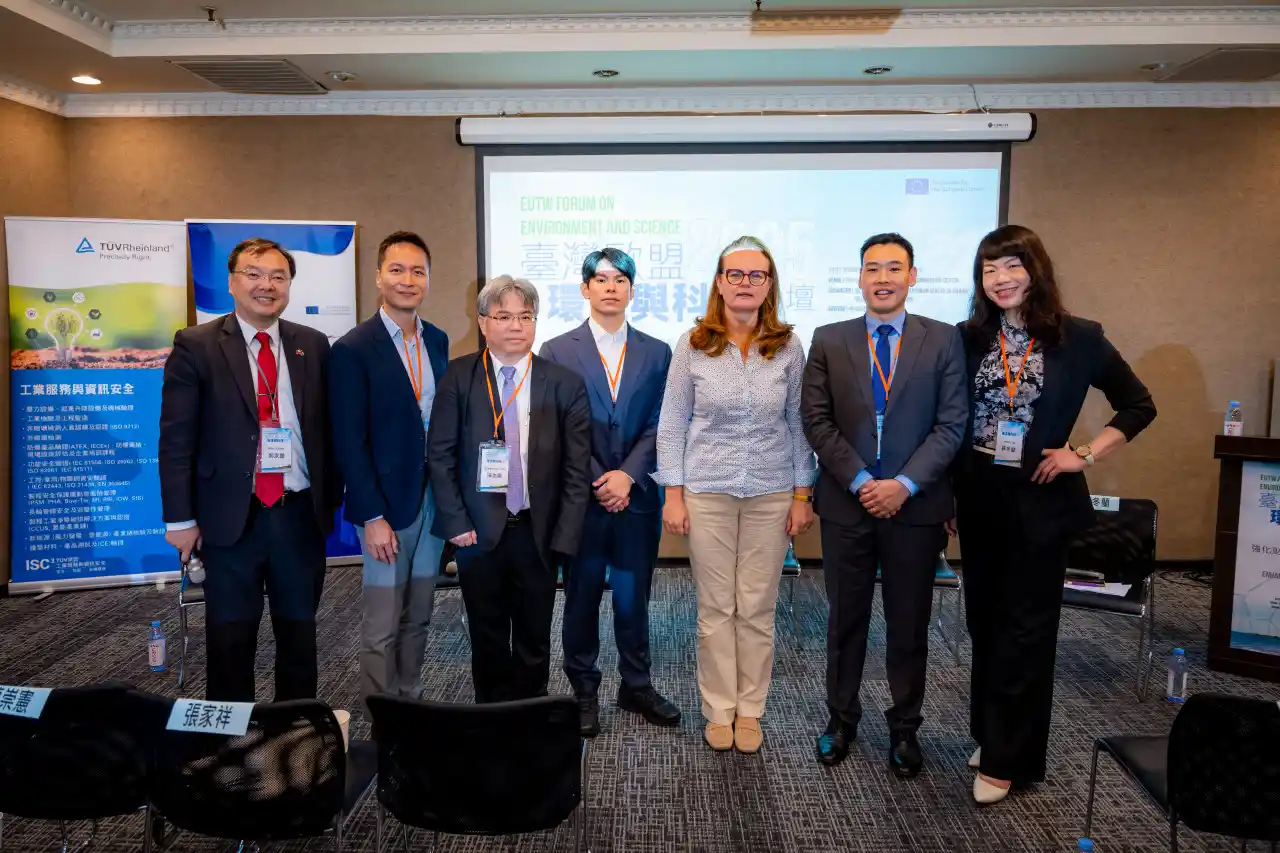
Keynote speeches at the forum featured four experts from government, academia, and industry, who provided in-depth discussions on key topics including Offshore Wind 3.3, CPPA market development, and AI data center energy policy:
• Chung-Hsien Chen, Director of Energy Administration, presented "Prospects for Taiwan Offshore Wind 3.3," emphasizing policy design that enhances investment confidence, improves contract fulfillment mechanisms, and streamlines grid integration and project development.
• Aušra Dr. Aušra Aleliūnaitė, Head of Cybersecurity at the European Parliament, shared insights on the EU's Energy Efficiency Directive (Directive 2023/1791) in response to the AI boom. The directive requires large data centers to disclose energy usage and increase renewable energy adoption, driving accountability in green electricity procurement.
• Kevin Liu, Vice President at Walsin Lihwa, discussed reforms in offshore wind transmission asset development models to reduce risks, improve integration efficiency, and enhance financial viability.
• Luke Cheng, President of Taiwan Smart Electricity & Energy (TSEE), highlighted that Taiwan's corporate green power demand is expected to exceed 100 billion kWh by 2040. TSEE will offer flexible solutions to help developers, power sellers, and buyers achieve price equilibrium and foster sustainable market growth.
Despite contractual challenges faced during Round 3.2, the industry remains optimistic about Round 3.3. With well-designed mechanisms, Taiwan could once again attract investments and boost international competitiveness. Many participants emphasized the urgent need to ensure energy supply and industrial resilience amid the rise of high-consumption sectors like AI and the global energy transition. Taiwan may consider adopting binding renewable energy disclosure requirements for large electricity consumers, similar to the EU's Energy Efficiency Directive.
The forum was co-hosted by the European Union Center in Taiwan and TÜV Rheinland Taiwan, with the Chung-Hua Institution for Economic Research (CIER) serving as the think tank. The event successfully facilitated policy development for Taiwan's Offshore Wind 3.3 and enhanced exchanges on Taiwan-EU policy trends.
